Introduction
Water resources are today at the heart of every concern. Repeated droughts, heatwaves, pressure on agriculture and industry: water has never been so clearly regarded as a strategic resource. In this context, one solution is attracting growing attention: treated wastewater reuse (TWWR).
Rather than discharging treated wastewater back into the natural environment, why not give it a second life to irrigate crops, clean roads, cool industrial facilities or recharge groundwater? Behind this appealing approach lie many questions — real opportunity or regulatory and technical constraint?
I. What is treated wastewater reuse?
TWWR consists of recovering the water that exits treatment plants after processing. Instead of being discharged into rivers or the sea, this water undergoes additional treatment to meet specific quality criteria depending on the intended use (agriculture, industry, urban). The more sensitive the use, the more advanced the treatment must be.
The concept is not new: Israel reuses 85% of its wastewater, Singapore developed its NEWater programme, California adopted TWWR in response to chronic droughts, and Spain reuses around 14% of its treated wastewater. In France, less than 1% is currently reused, against a 2.4% European average.
II. Benefits of TWWR
TWWR reduces pressure on freshwater resources by reserving drinking water for essential uses. It secures supply during droughts, benefits agriculture (irrigation of crops, vineyards, orchards), industry (cooling, process water) and urban areas (road cleaning, green space watering). It also reduces long-term costs and transforms treatment plants into water recovery facilities that create value.
Organisations that adopt TWWR can leverage their environmental commitment as a CSR and competitive differentiator.
III. Limitations and constraints
At EU level, Regulation (EU) 2020/741, applicable since 26 June 2023, sets minimum quality requirements for water reused in agricultural irrigation. In France, the restrictive Order of 2 August 2010 was replaced by a new framework: Decree No. 2023-835 of 29 August 2023, then the Order of 14 December 2023 (watering of green spaces) and the Order of 18 December 2023 (irrigation of agricultural crops). Administrative procedures nevertheless remain long. Social acceptability is limited by the psychological toilet-to-tap barrier. TWWR requires advanced treatment technologies (ultrafiltration, UV disinfection, chlorination) and separate distribution networks. CAPEX and OPEX are significant, which explains why TWWR is more developed in countries where drinking water is scarce and expensive.
IV. A strategic opportunity
TWWR can become a tool for climate resilience, a lever for competitiveness and a driver of innovation. Success stories in France (Nice, Cannes, Narbonne, Montpellier) and internationally (Spain, Singapore, Israel) prove this approach is not only possible but can become the norm.
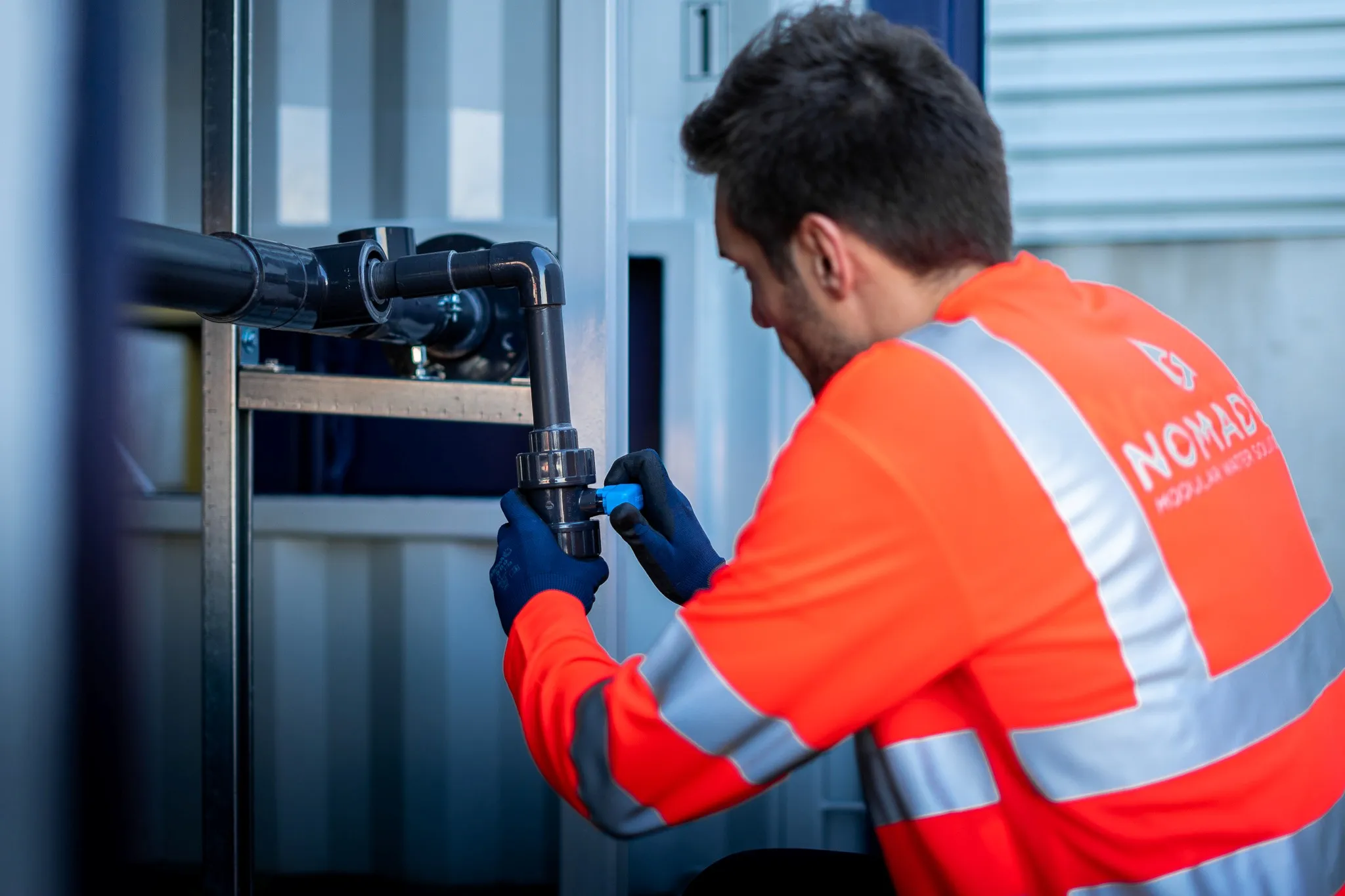
At Nomado, our modular tertiary treatment units are specifically designed for TWWR applications: compact, high-performing and compliant with the most stringent standards.
FAQ
1. Which countries lead the world in TWWR? Israel (85%), Singapore (NEWater) and Spain (14%).
2. Is TWWR safe for health? Yes, provided strict standards are observed. Advanced treatment eliminates bacteria, viruses and contaminants.
3. Which sectors can benefit in France? Agriculture, industry, local authorities and, in the future, groundwater recharge.
4. Can TWWR reduce water bills? Yes, over the long term, by securing supply against water restrictions.
5. What are the main barriers in France? Complex regulatory framework, high costs relative to drinking water, limited social acceptability and infrastructure adaptation requirements.