Introduction
A water treatment plant that fits in a few containers. A complete solution, tested in the workshop, delivered on site and operational in weeks. Equipment designed for a construction site at altitude, an industrial base camp in the Middle East, or a rural municipality in sub-Saharan Africa. This is not science fiction — it is Nomado’s everyday reality.
How do you go from a client requirement to a prefabricated plant that operates reliably anywhere in the world? What innovation principles guide our design choices? And why is modularity often the best technical and economic response to the challenges of water treatment?
I. The starting point: listen to the problem, not sell a solution
At Nomado, the first step is never to propose a catalogue. It is to understand the problem in all its dimensions: what water to treat, for what use, under what conditions, and with what economic constraints.
This initial diagnostic is fundamental. A misreading of the problem inevitably leads to the wrong solution, even a technically brilliant one. A common sector reflex — over-sizing installations “for safety” — results in excessive investment and unnecessarily high energy consumption. At Nomado, we work to the right size, guaranteeing clients an economically optimised solution, not just a technically safe one.
II. Modularity: an engineering principle, not just a format
Modular prefabrication is not a marketing gimmick. It is a response to concrete constraints:
- Drastically reduced deployment lead times: workshop fabrication in parallel with engineering and civil works. Where a conventional plant requires 12–24 months, a Nomado unit can be operational within weeks.
- Workshop-controlled quality: assembly and testing in a controlled factory environment guarantees quality far superior to in-situ assembly.
- Flexibility and scalability: capacity increased by simply adding a module.
- Mobility: installation relocated and reused for temporary or seasonal needs.
- Reduced carbon footprint: less civil engineering, less concrete, less site time.
Nomado units come in three formats: compact chassis-mounted units (small flows, standard lorry transport), container units (20’ or 40’ ISO, shipped by sea/road/rail), and multi-module units (larger flows, each module with a specific function).
III. Processes: the right technologies for the right problem
Nomado masters a wide range of processes: physico-chemical treatment (coagulation-flocculation, settling, flotation), filtration (sand, anthracite, membranes from MF to RO), biological treatment (MBBR, activated sludge, biofiltration, lagoons), disinfection (chlorination, UV, ozonation), and sludge treatment (thickening, dewatering, drying).
The “secret” of a good plant is not in an isolated miracle technology but in the coherent assembly of complementary processes — the treatment train. The challenge is to design a train that is robust, lean in energy and reagents, easy to operate, and scalable.
IV. Continuous innovation: R&D and field feedback
At Nomado, every project is a learning opportunity. We systematically collect field feedback and feed it back into our engineering department. A problem encountered on one project becomes a solution integrated into the next.
We design installations thinking of the operator who will be alone facing the machine: equipment accessibility for maintenance, simple reagent management, automation of repetitive tasks, complete and accessible documentation.
V. Examples that speak for themselves
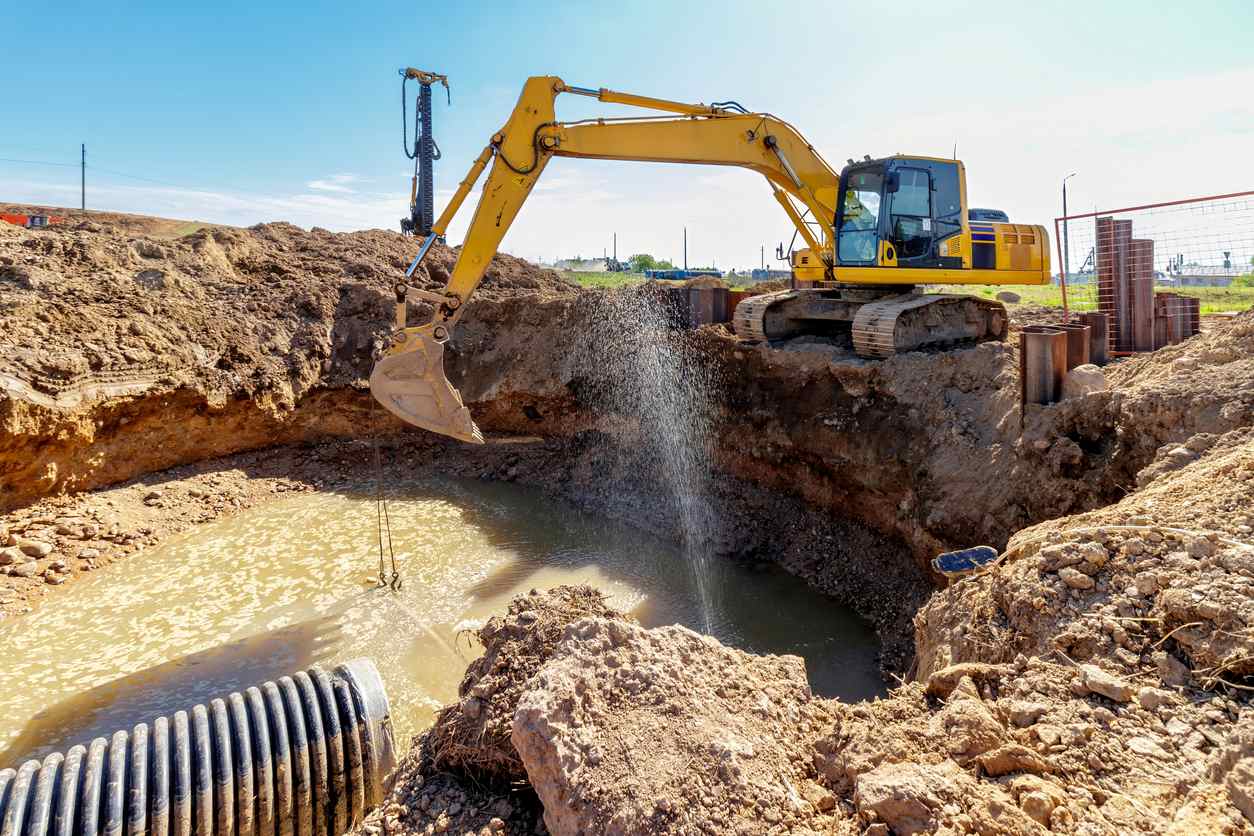
Alpine tunnel boring project: high-altitude railway tunnel, water heavily loaded with limestone fines and oils, zero discharge constraint to the nearby stream. Nomado solution: compact physico-chemical chassis unit with lamellar settling, flotation and polishing filtration. Installed in 3 weeks, zero non-compliance throughout.
Rural community in West Africa: village of 5,000 inhabitants without drinking water, high-turbidity river. Nomado solution: container drinking water unit with pre-filtration, coagulation-flocculation, sand filtration and chlorination. The trained local team has operated the installation autonomously for over 3 years.
Conclusion
Innovation at Nomado is pragmatic, field-tested and results-oriented. It is the ability to combine proven technologies creatively to solve complex problems in constrained contexts. It is the conviction that the best solution is the one that genuinely works, durably, in the hands of those who will operate it.
FAQ
1. How long does it take to design and build a Nomado unit? 4 to 16 weeks from order to commissioning. 6 to 8 weeks for the most common projects.
2. Are Nomado solutions suitable for small flows? Yes — from a few m³/h to several hundred m³/h.
3. Can a Nomado installation be expanded? Yes — by adding a module without disrupting the existing installation.
4. Can Nomado operate the installations it designs? Yes — through the WaaS model, billed per m³ treated.
5. What is the lifespan of a Nomado modular unit? 15 to 20 years with regular maintenance. Modular design facilitates component replacement without lengthy downtime.