The client challenge
As part of the Monaco Land Reclamation (UEM) project — one of Europe's most iconic civil engineering projects — the Principality undertook the construction of 6 hectares of land reclaimed from the sea. After Bouygues Travaux Publics completed the marine platform, the Engeco – Pastor – Bouygues Construction consortium took over the construction of the future buildings.
To supervise the works, the consortium installed a 195-person welfare facility on site. These welfare facilities generated domestic wastewater that had to be treated before discharge into the sea, within a particularly demanding regulatory framework:
- Direct discharge into the Mediterranean Sea, requiring high treatment levels
- Very strict constraints on nitrogen and phosphorus removal
- Landlocked site with no connection to the public sewer network
- Long, continuous operation over 3 years of construction
- Very limited available space, typical of construction environments in dense urban settings
The consortium entrusted Nomado with the design, construction, commissioning and full operation of the welfare facility wastewater treatment plant.
The Nomado solution
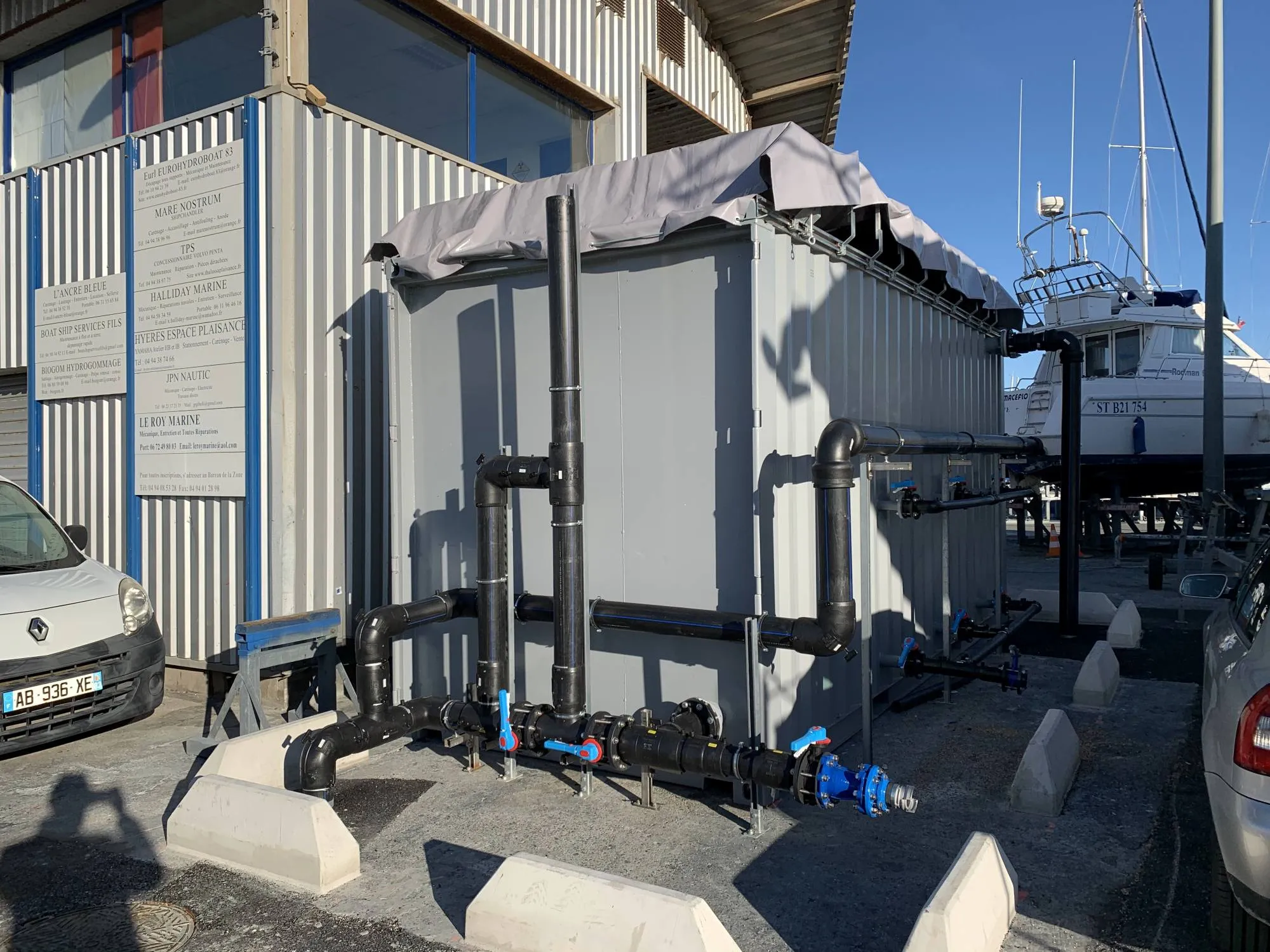
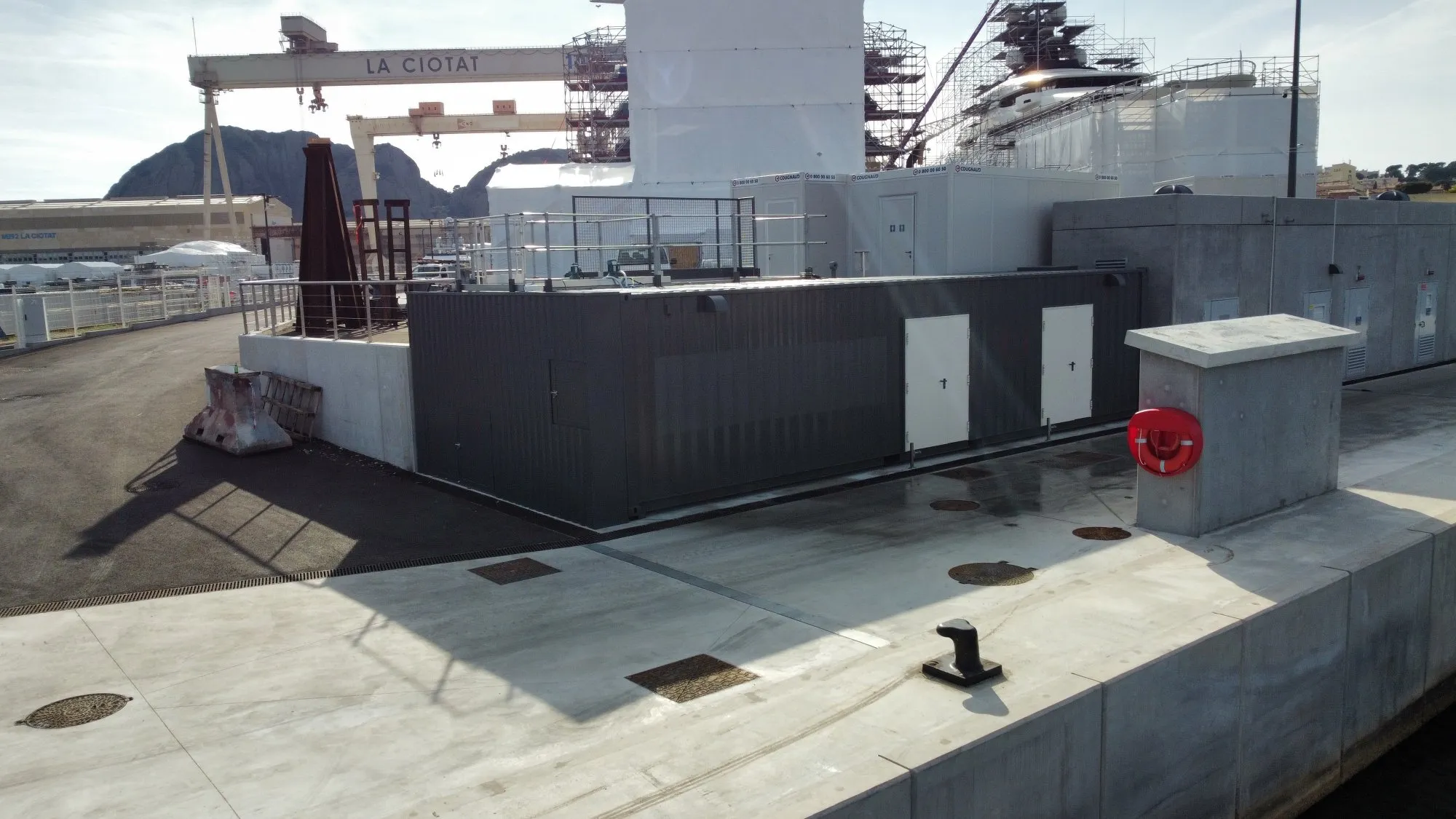
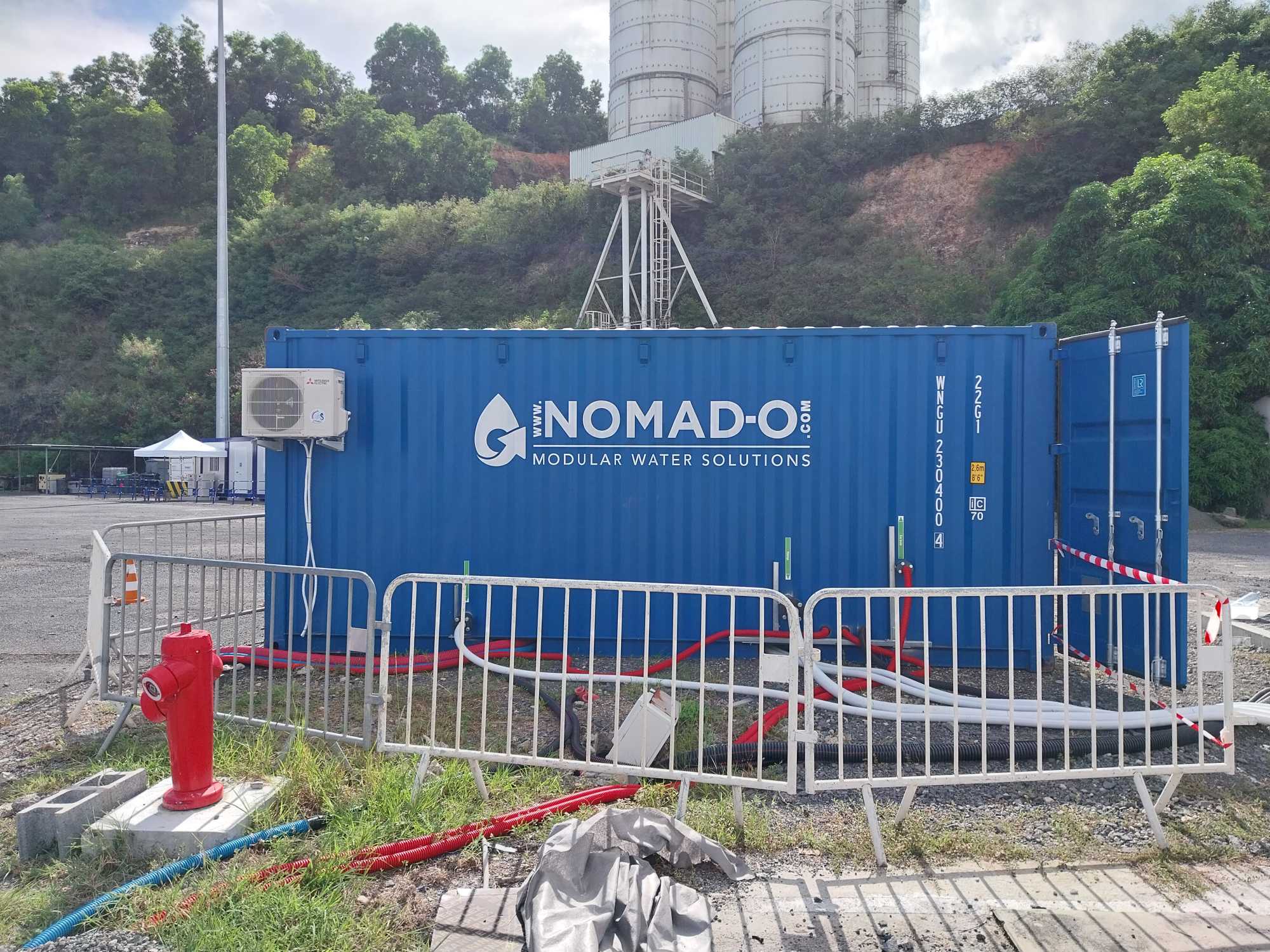
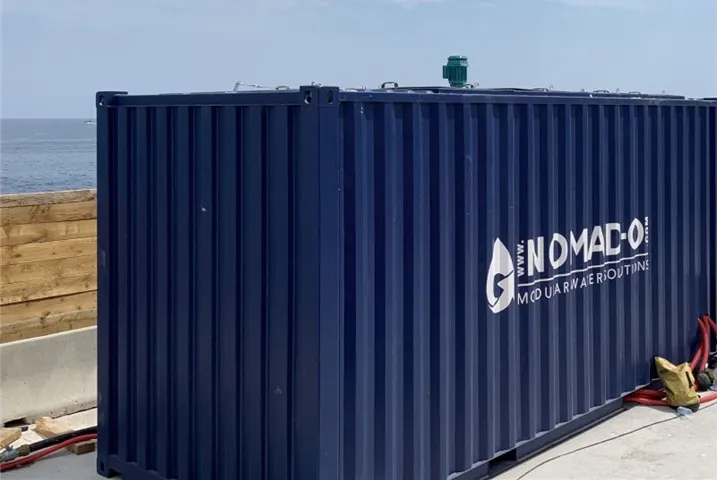
Nomado delivered a fully turnkey solution: from the design study through to operation over the entire duration of the project, integrating the full treatment process into a single compact container.
Our approach was built around three commitments: nitrogen and phosphorus removal performance, maximum compactness, and guaranteed operational continuity over 3 years.
Advanced MBBR biological process in a 65 PE container
The unit deployed by Nomado treats welfare facility effluents through a complete biological process integrating nitrification, denitrification and dephosphatation, to meet the sea discharge limit values:
Collection and pumping
- 2 effluent lift stations: intake of raw wastewater from all points in the welfare facility and transfer to the treatment unit
Pre-treatment
- Integrated pre-treatment: screening and straining of effluents before biological treatment
- Feed tank: regulation of incoming flow to the biological reactors
Advanced biological treatment
- Denitrification reactor: removal of nitrate nitrogen (NO₃) by biological reduction under anoxic conditions
- MBBR biological reactor (Moving Bed Biofilm Reactor): degradation of carbonaceous pollution by biofilm fixed on mobile carriers
- Nitrification reactor: conversion of ammonium nitrogen (NH₄) to nitrates under aerobic conditions
Clarification
- Lamellar clarifier: separation of biological sludge and clarification of treated effluent before sea discharge
Regulatory self-monitoring
- Continuous measurement of flow rate, pH, dissolved oxygen, temperature and redox potential
- Measurement and self-monitoring equipment compliant with sea discharge control requirements
Integrated operation over the project duration
Design and construction
- Full design studies (hydraulic and biological sizing)
- Manufacturing and integration of all equipment in a compact 65 PE container
- On-site commissioning by Nomado teams
Continuous operation over 3 years
- Regular operational monitoring throughout the construction period
- Sludge management, consumables and maintenance operations
- Guaranteed sea discharge compliance throughout the period
Results achieved
- Treatment of effluents from 195 people on a site with no network connection, with direct sea discharge
- Compliance with discharge limit values, including nitrogen and phosphorus parameters
- Fully containerised solution, adapted to the space constraints of an exceptional urban construction site
- Uninterrupted operation over 3 years ensured by Nomado teams