The client challenge
The commune of Hyères-les-Palmiers operates a 7,610 m² careening area at Port Saint-Pierre, dedicated to the maintenance and servicing of leisure craft. Like virtually all careening areas in France, this site was subject to the obligation to bring its discharges into compliance under the Vague Bleu Carénage reference framework.
The effluents generated by careening activities consist of two distinct streams:
- High-pressure jet washwater: water used for hull cleaning, loaded with antifouling paints (copper, zinc, biocides), hydrocarbons, grease and suspended solids from hulls and boat equipment
- Stormwater runoff: rainwater flowing across the careening surface, washing off residual paint particles, dust and pollutants deposited on the area between cleaning operations
These two streams, collected across the entire platform, had to be treated to achieve the performance required by the Vague Bleu Carénage label before any discharge into the Mediterranean Sea.
The commune of Hyères-les-Palmiers entrusted Nomado with the design, construction, commissioning and operation of the treatment unit.
The Nomado solution
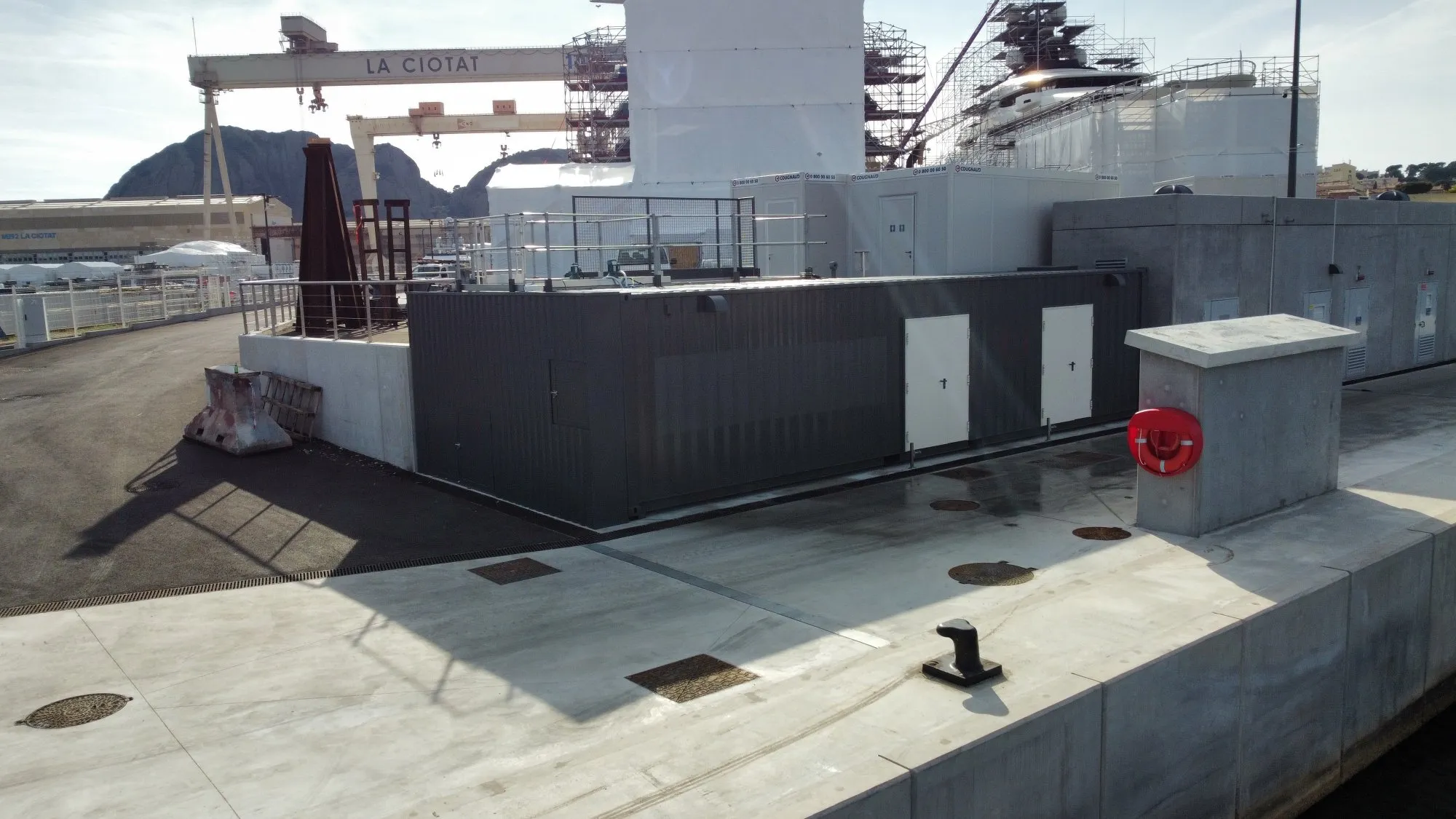
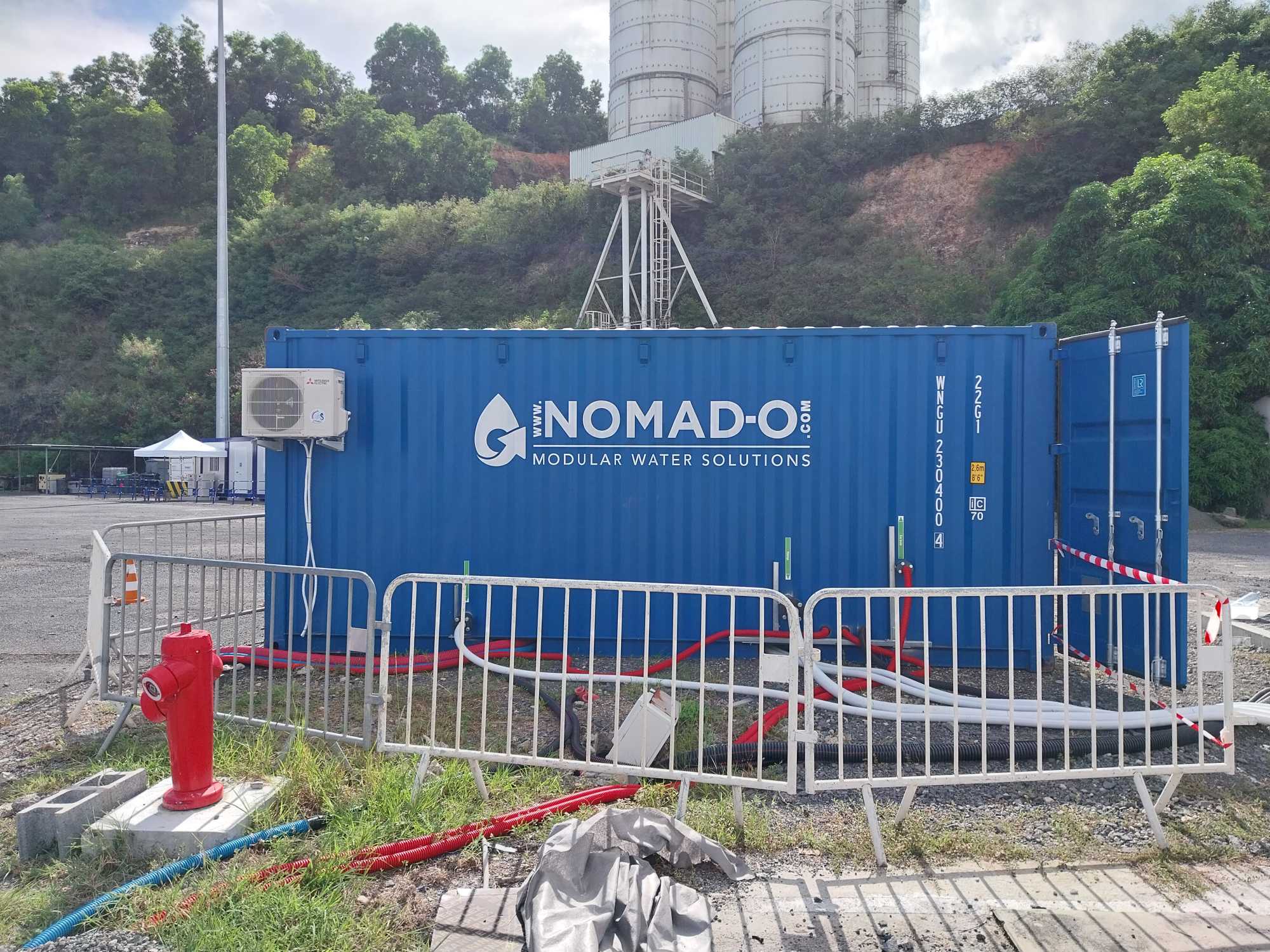
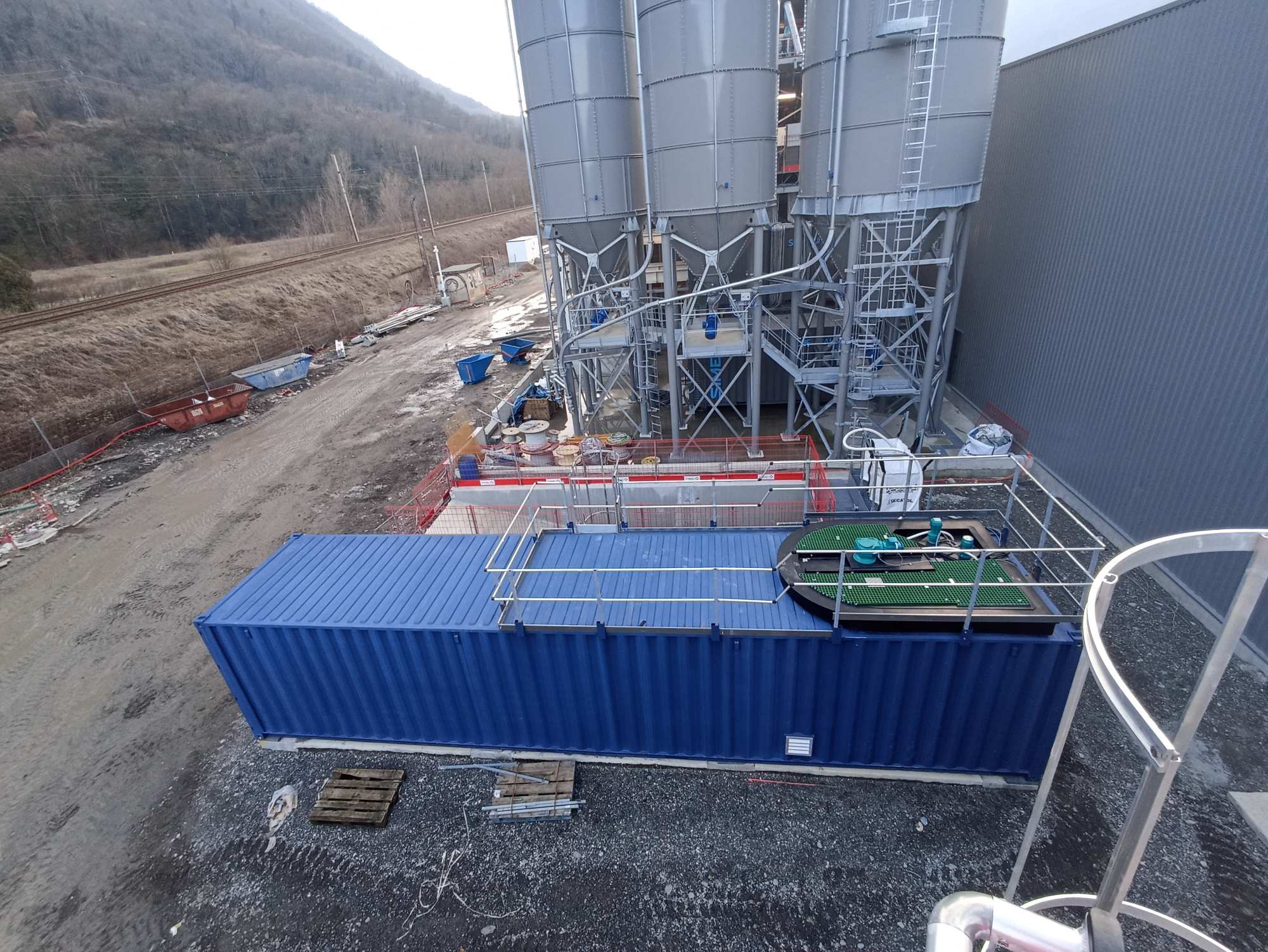
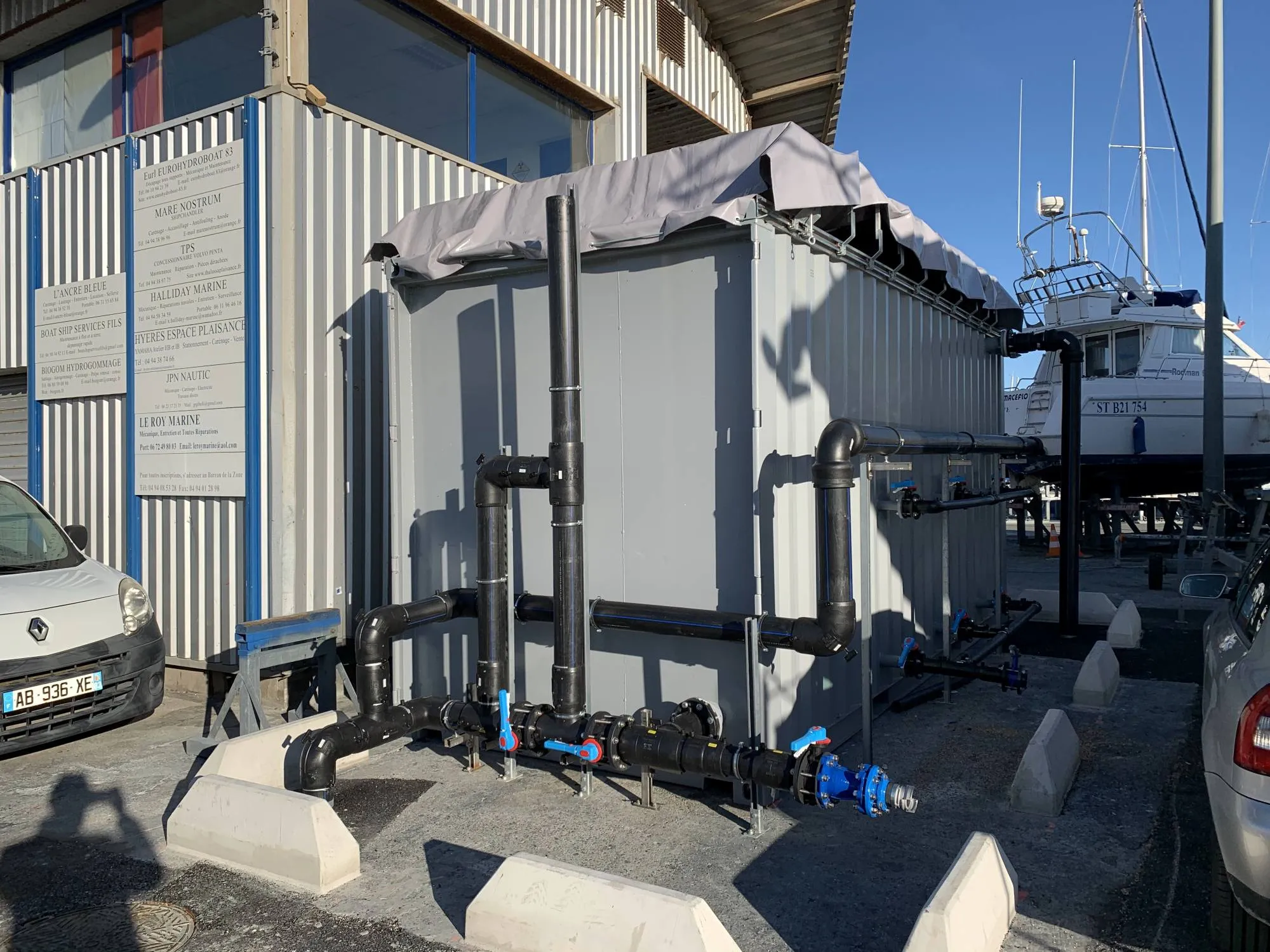
Nomado designed and deployed a compact containerised treatment unit, sized to absorb the high runoff flows from the platform (up to 144 m³/h) while effectively treating the pollutants specific to careening.
Our approach combined hydraulic sizing adapted to rainfall peaks, a physico-chemical process targeted at careening pollutants, and integrated operation.
Physico-chemical treatment process
Collection and pumping
- 2 lift stations sized for the variable flows of the careening area:
- Station 1: 72 m³/h — intake of careening water (high-pressure jets)
- Station 2: 144 m³/h — intake of stormwater runoff from the entire 7,610 m² platform
Pre-separation
- Grit trap: gravitational separation of coarse sludge, floating debris and free hydrocarbons at the process inlet, before any physico-chemical treatment
Lamellar settling
- Lamellar settling: accelerated separation of suspended solids (TSS), paint particles and metals adsorbed onto particles, by inclined-plate settling. Continuous sludge extraction from the base of the settler
Final adsorption
- Activated carbon adsorption: removal of residual dissolved pollutants — dissolved hydrocarbons, biocides (trace copper, zinc), organic compounds from antifouling paints — by adsorption on a granular activated carbon bed
Design and operation
- Full design study: hydraulic and chemical sizing adapted to the flows and pollutant load of the Hyères careening area
- On-site commissioning by Nomado teams
- Unit operation: analytical monitoring of discharges, management of consumables and sludge, preventive and corrective maintenance
Results achieved
- Compliance with the Vague Bleu Carénage standard achieved from commissioning
- Treatment of both careening-specific streams: high-pressure jet washwater and stormwater runoff, across a surface area of 7,610 m²
- Management of significant hydraulic peaks associated with rainfall events (up to 144 m³/h) thanks to the dual lift station
- Compact containerised unit, integrated into the existing careening area without major infrastructure modification
- The commune of Hyères-les-Palmiers meets its environmental obligations and protects Mediterranean waters from careening pollutants