The client challenge
As part of the Tunnel Euralpin Lyon Turin (TELT) project, one of Europe's largest railway construction projects, Campenon Bernard (Vinci Construction) operates a tunnel segment prefabrication plant at La Chapelle (73). Tunnel segments are reinforced concrete elements assembled by the tunnel boring machine to form the tunnel's permanent structure.
The serial manufacture of these elements generates highly specific process water, presenting a challenging mix of pollutants:
- Very high pH (strongly alkaline water) from cementitious washwater generated during demoulding and mould cleaning
- High suspended solids (TSS) content: concrete fines, cement and aggregate residues
- Release agents: demoulding products applied to moulds to facilitate segment extraction
- Hexavalent chromium (Cr VI): a toxic compound originating from cements, classified as a priority hazardous substance, subject to strict discharge regulation
This water cannot be discharged without prior treatment. Nomado was selected to design and implement an effluent treatment and recycling unit, ensuring the site's regulatory compliance.
The Nomado solution
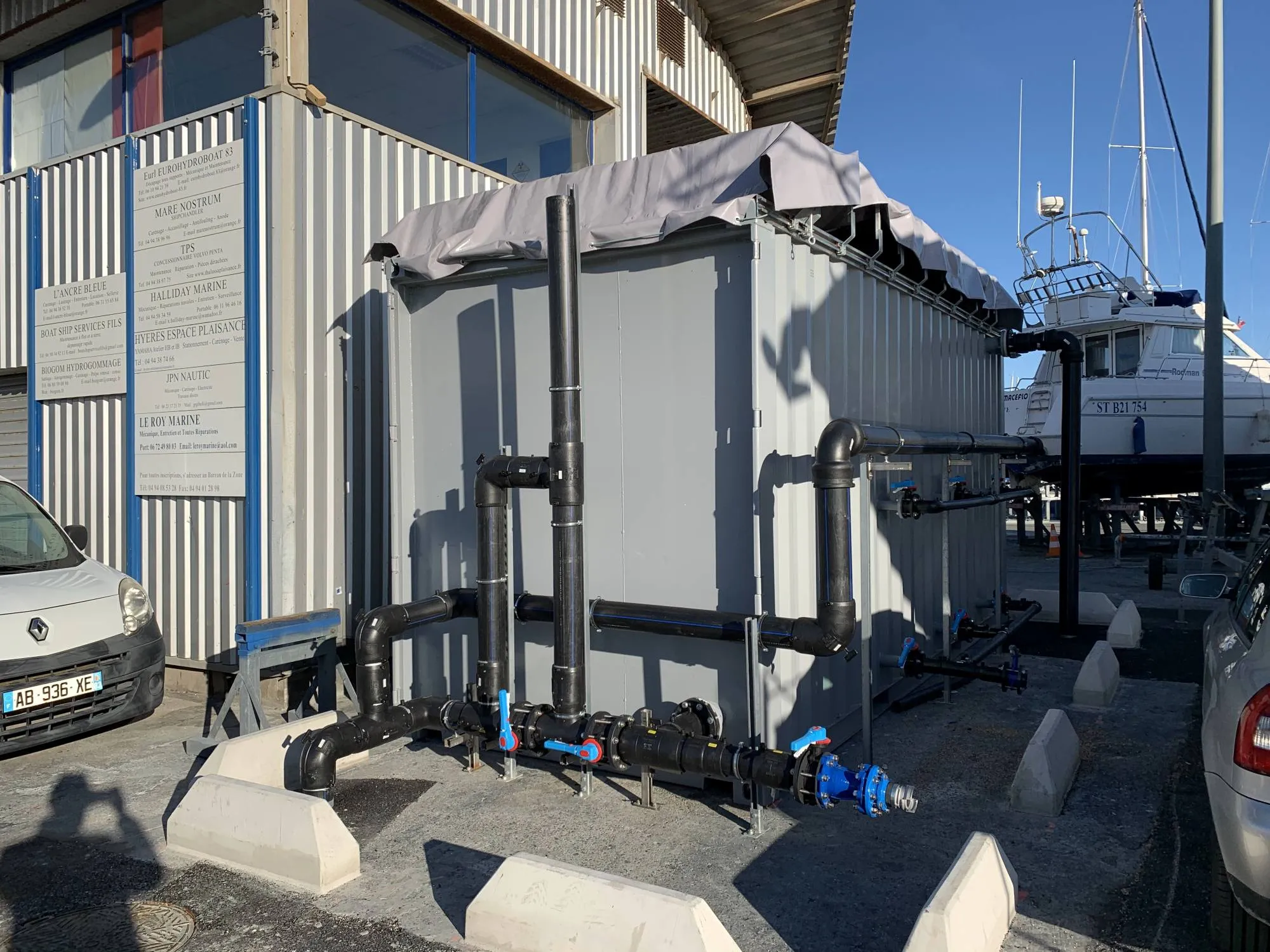
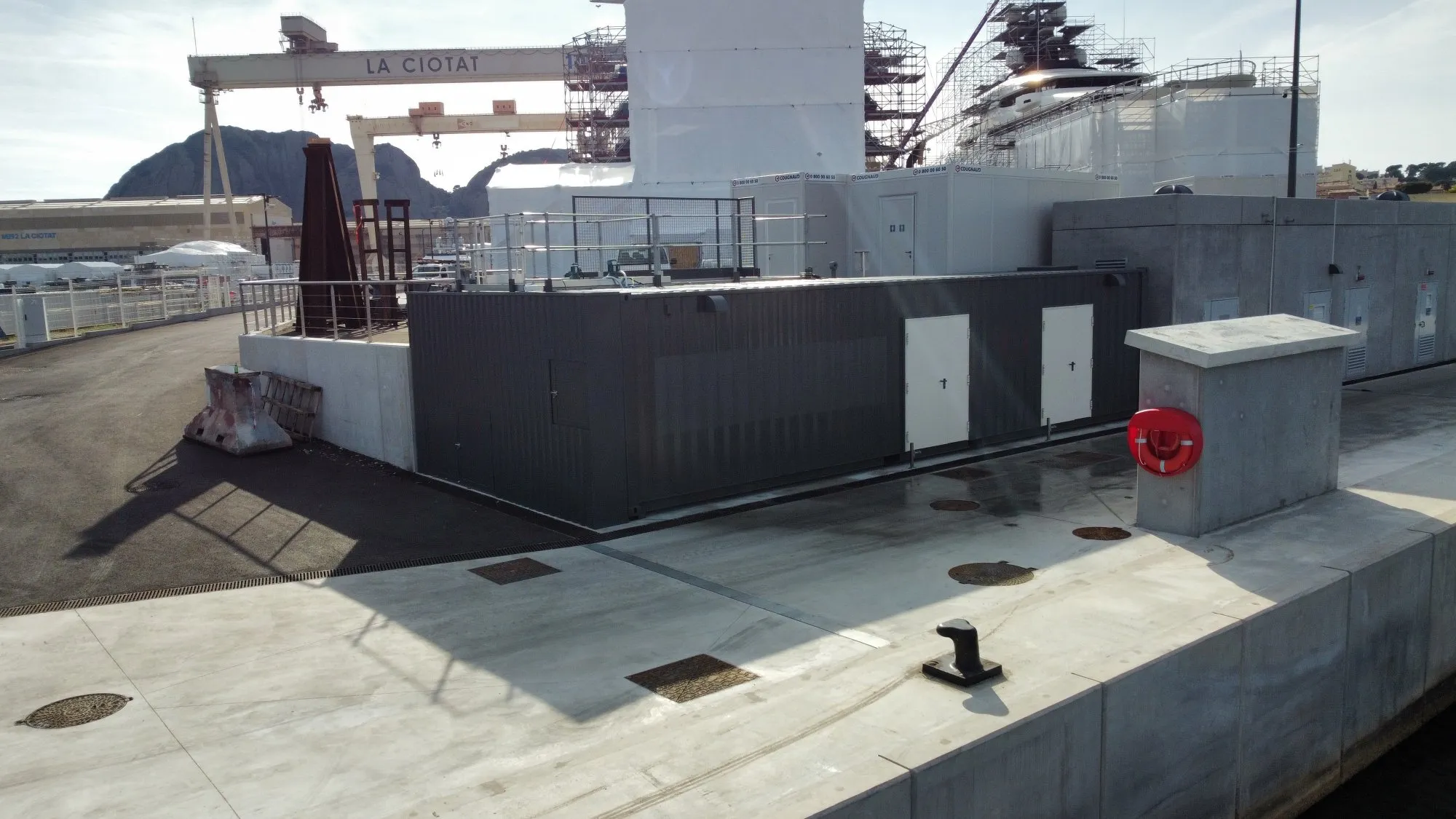
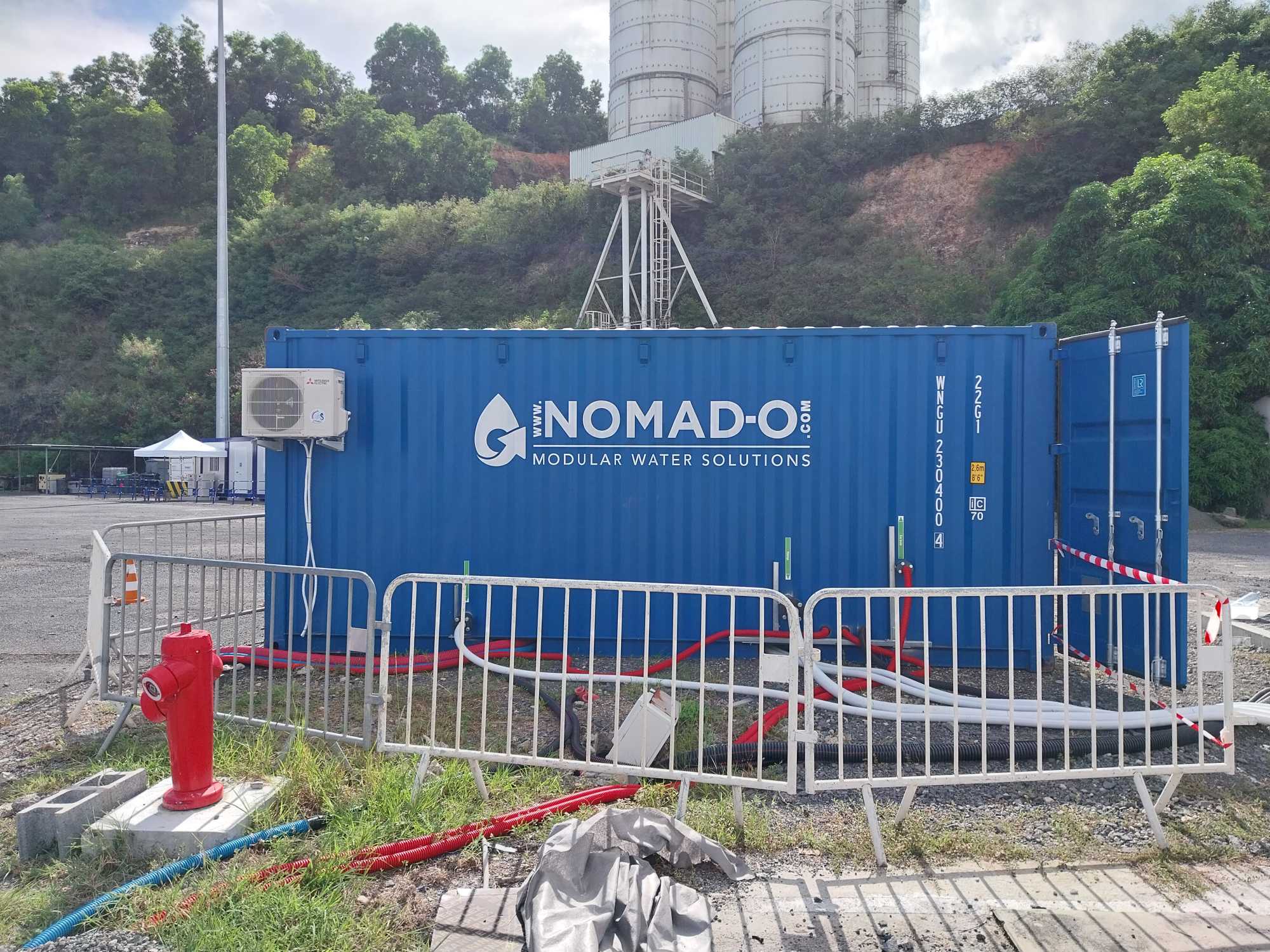
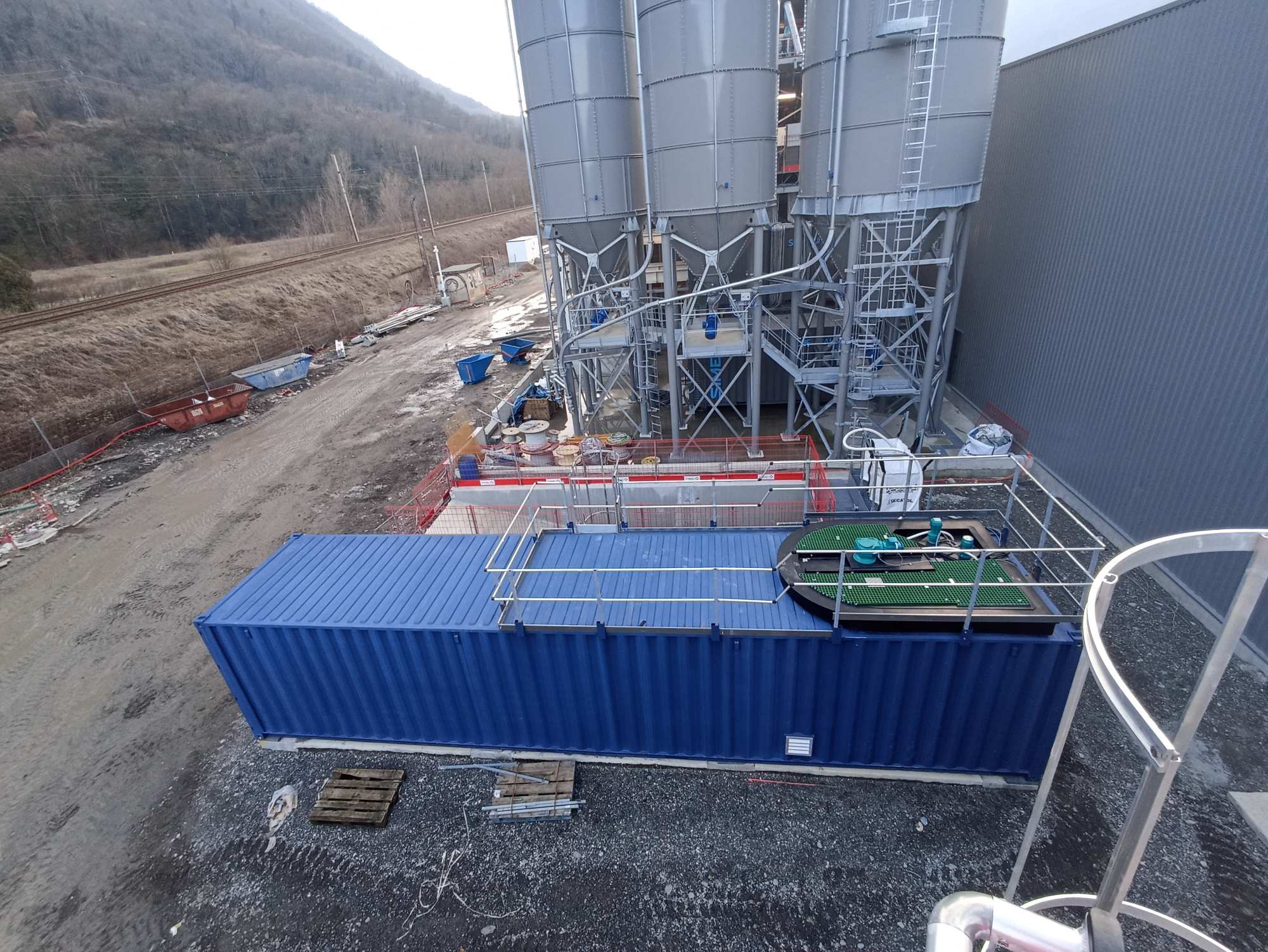
Nomado designed and deployed a complete physico-chemical treatment system, adapted to the specific characteristics of process water from the prefabrication plant. The dual objective was to treat effluents to make them compliant with discharge standards, and to enable their partial recycling to reduce the site's water consumption.
Physico-chemical treatment process
Collection and pumping
- Effluent lift station: collection of process water from the various points in the plant (demoulding, mould washing, production area cleaning) and transfer to the treatment unit
Physico-chemical treatment
- Physico-chemical treatment: coagulation and flocculation of suspended solids, precipitation of hexavalent chromium by chemical reduction (conversion of Cr VI to Cr III, less toxic and precipitable), and neutralisation of organic pollutants from release agents
pH correction
- pH rectification by neutralisation: correction of highly alkaline water from concrete washwater, to bring pH into the permitted discharge range (6.5 to 8.5). Process adapted to the high concentrations characteristic of concrete prefabrication water
Final filtration
- Sand filtration: polishing step for removal of residual suspended solids and flocs formed during physico-chemical treatment, ensuring TSS parameter compliance at outlet
Results
- Controlled investment: compact and modular solution, sized to the precise needs of the prefabrication plant with no over-specification
- Scalable system: adaptable architecture depending on changes in production volumes or regulatory requirements during the construction period
- Compliant treatment system: compliance guaranteed across all monitored parameters — pH, TSS, hydrocarbons, hexavalent chromium — in accordance with the prefectoral order applicable to the TELT construction site