The client challenge
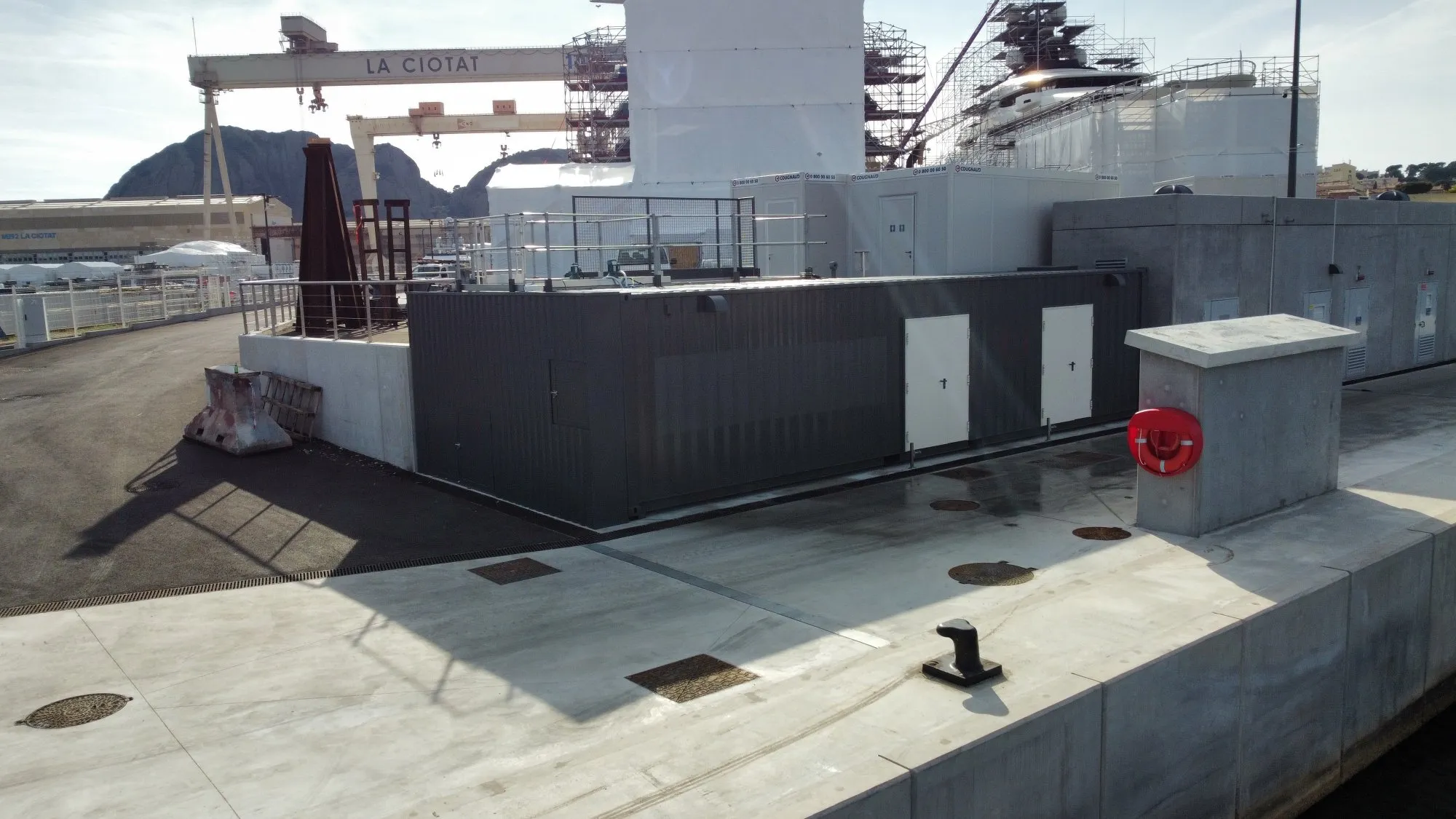
MB92 is a major industrial player in Mediterranean yacht maintenance and refit, operating a large shipyard at La Ciotat Shipyards (LCS). Careening, hull stripping and refurbishment activities generate polluted water heavily loaded with suspended solids (TSS) and heavy metals.
Faced with strict regulations on discharge quality into the Mediterranean, MB92 needed a treatment solution capable of:
- Effectively managing effluents from careening operations
- Treating polluted stormwater running off more than 22,000 m² of impervious surfaces
- Guaranteeing discharge compliant with the most demanding environmental standards (ICPE 2930)
To meet this challenge, MB92 turned to Nomado to define and deploy a reliable, durable and integrated solution.
The Nomado solution
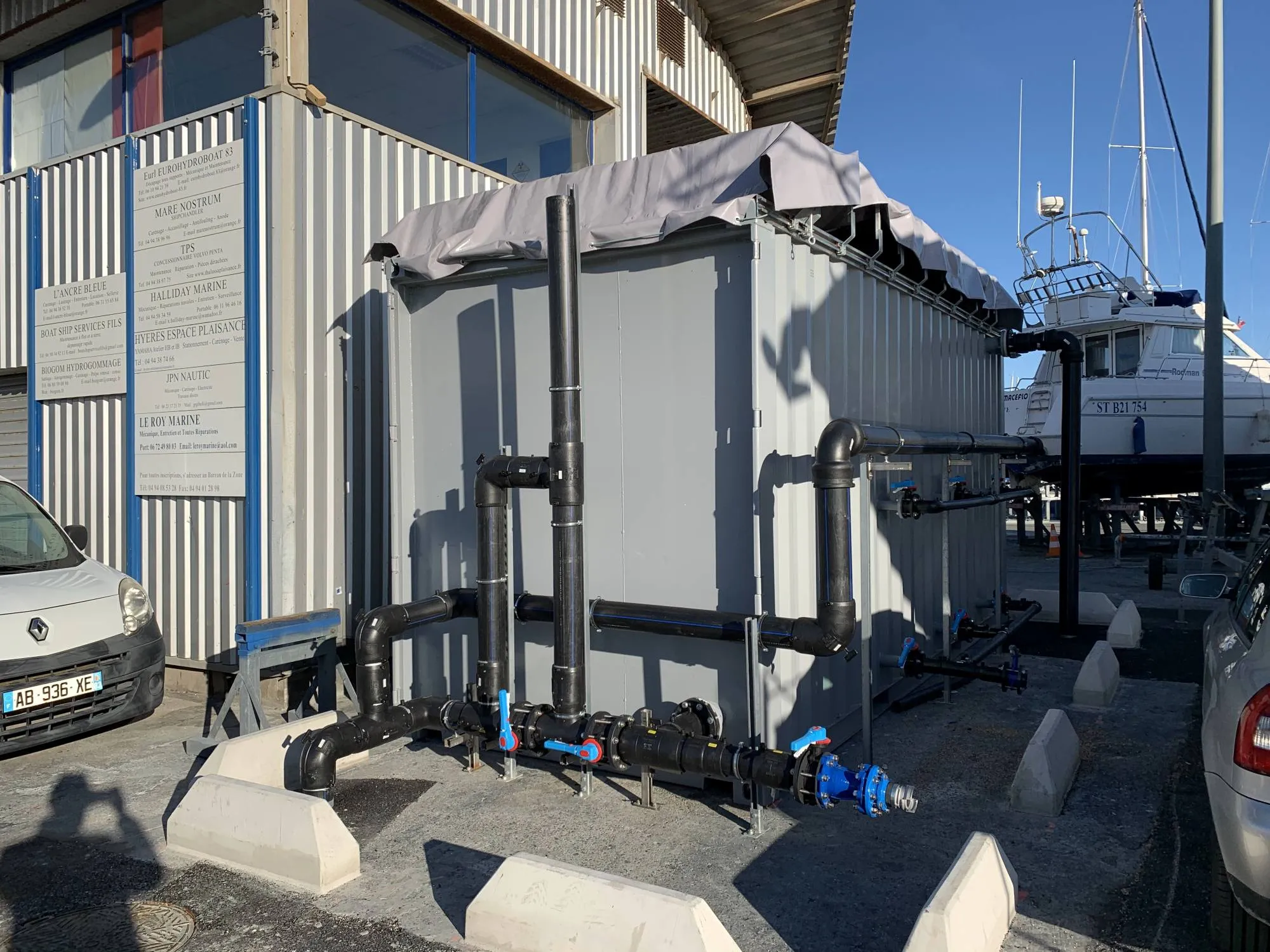
To support MB92, Nomado designed, built and commissioned a complete, modular and prefabricated treatment unit specifically adapted to the constraints of the shipyard.
Our approach was built on three core commitments: technical effectiveness, compactness and simplicity of operation.
A comprehensive, proven technical response
The unit installed by Nomado combines several complementary treatment steps, guaranteeing impeccable discharge quality:
Buffer storage
- Hydraulic regulation to smooth flow peaks associated with rainfall events.
Pre-treatment
- A grit trap to capture sand and coarse particles.
Physico-chemical treatment
- Coagulation and flocculation: addition of reagents to agglomerate dissolved pollutants.
- Lamellar settling: effective separation of sludge and suspended solids.
Tertiary treatment
- Sand filtration: removal of residual fine particles.
- Granular activated carbon adsorption: capture of micropollutants and heavy metals.
- Final microfiltration: safety barrier before discharge.
A modular solution, delivered turnkey
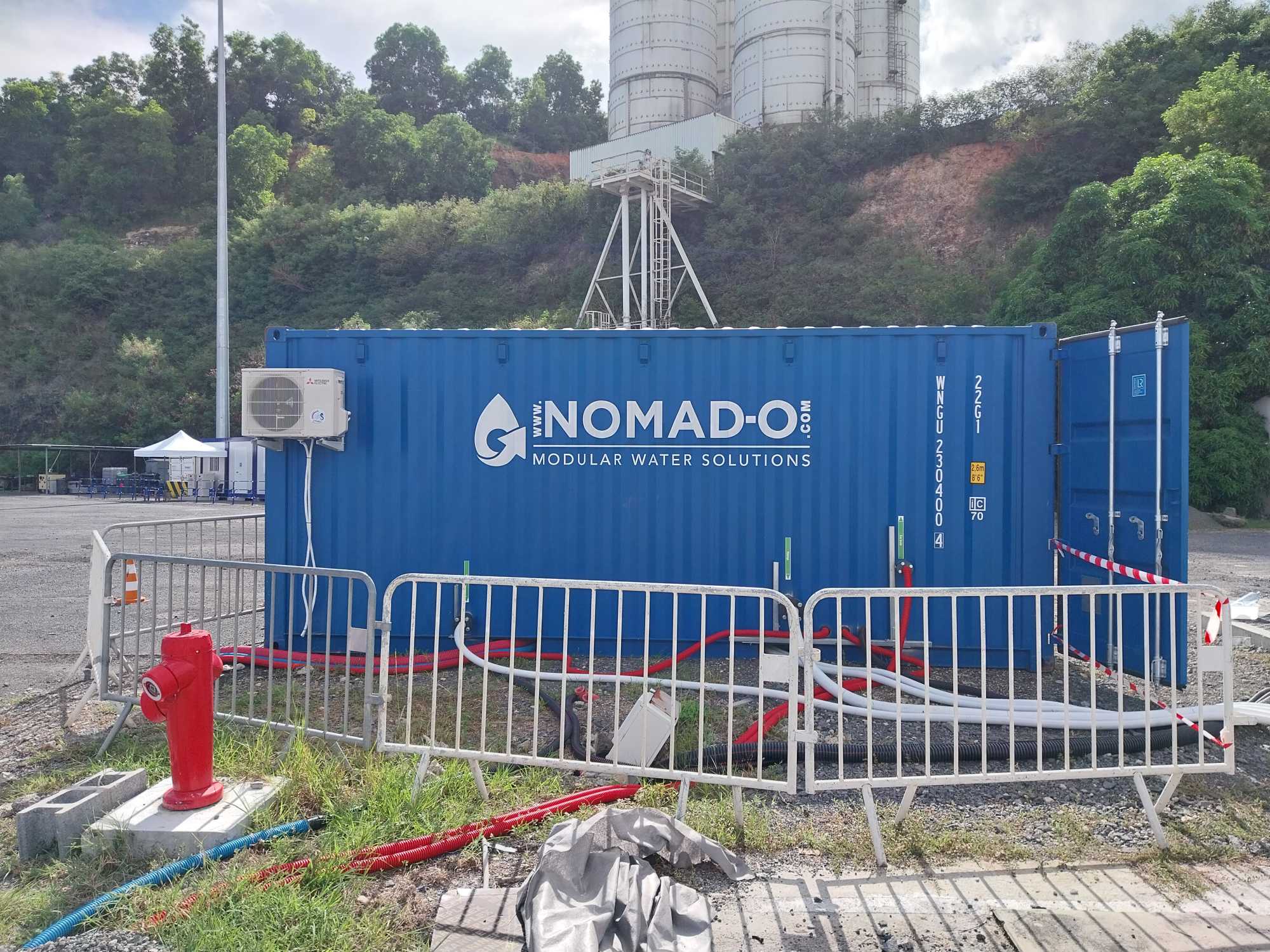
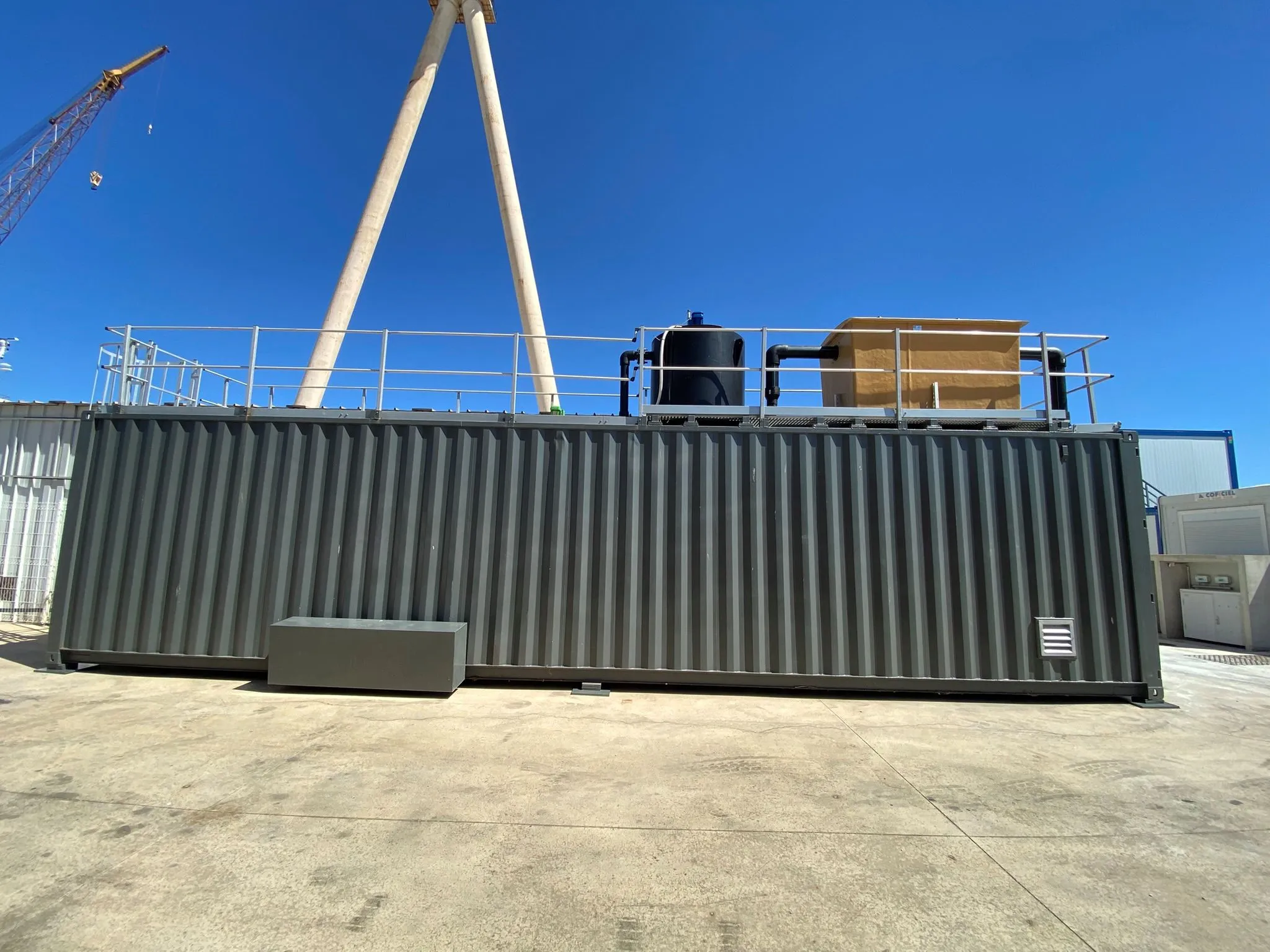
Containerised treatment unit integrated in a 40-foot container
- Treatment capacity: 15 m³/h, scalable to meet future requirements.
- Rapid installation with minimal land footprint.
Full operational support
- On-site commissioning.
- Training of operating staff.
- Remote monitoring system enabling intervention on the unit from off-site.