The client challenge
The commune of Rogliano, on Cap Corse, is normally supplied with drinking water by several boreholes that recharge a communal reserve of 47,500 m³ during the winter season. But during the summer of 2022, a severe rainfall deficit rendered these boreholes unproductive, causing a water supply crisis for the commune and its visitors at the height of the tourist season.
Faced with the emergency, the commune needed a solution capable of:
- Producing drinking water in sufficient quantities to fill the 47,500 m³ reserve before and during the summer season
- Deploying a mobile and rapidly operational unit, from the only resource available in abundance: the Mediterranean Sea
- Guaranteeing water compliant with Drinking Water Standards (DWS) regulatory requirements
- Integrating into the port area of Macinaggio, with space and island accessibility constraints
The commune of Rogliano entrusted Nomado with the design, supply, commissioning and operation of a 25 m³/h mobile seawater desalination unit.
The Nomado solution
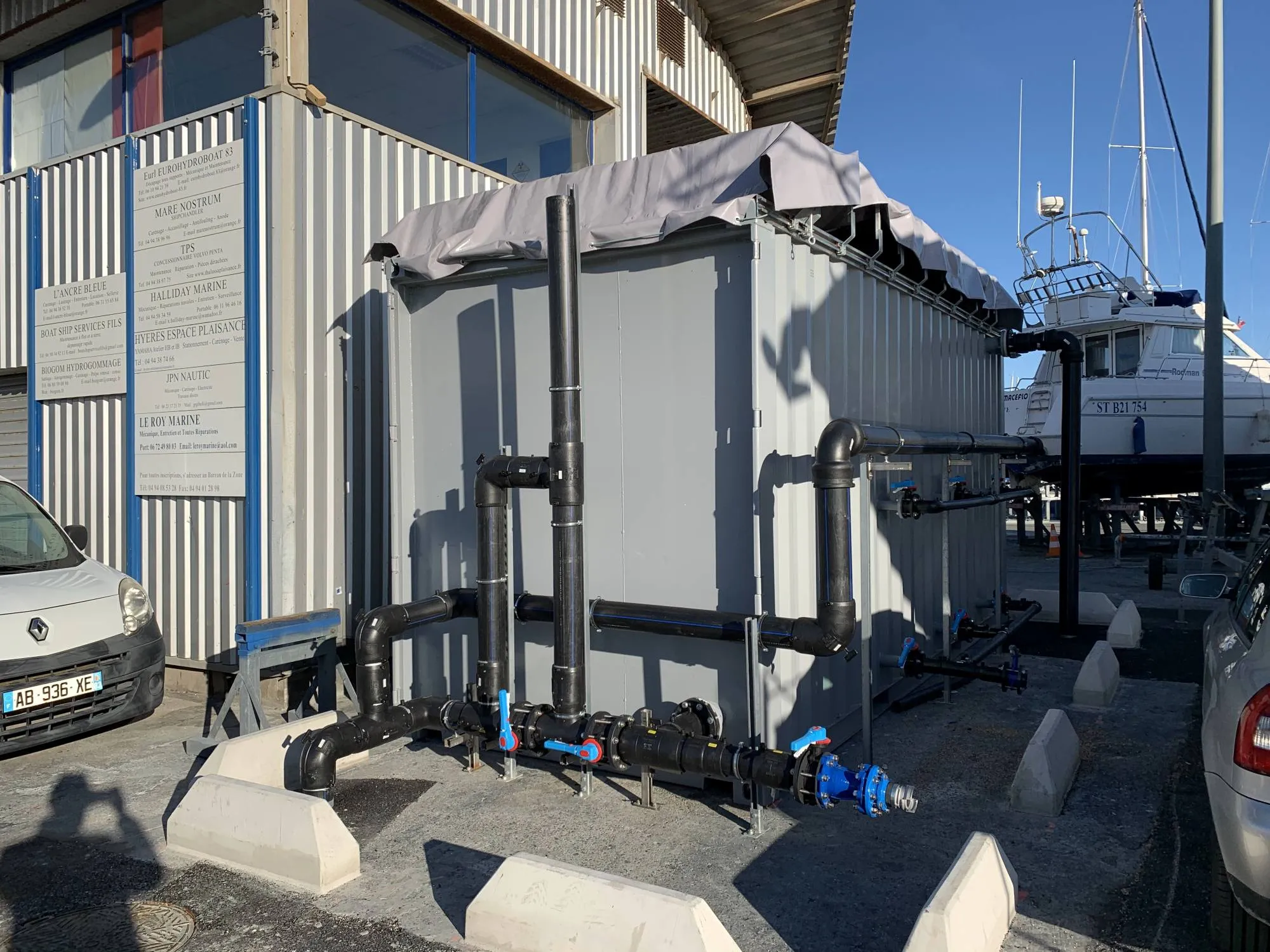
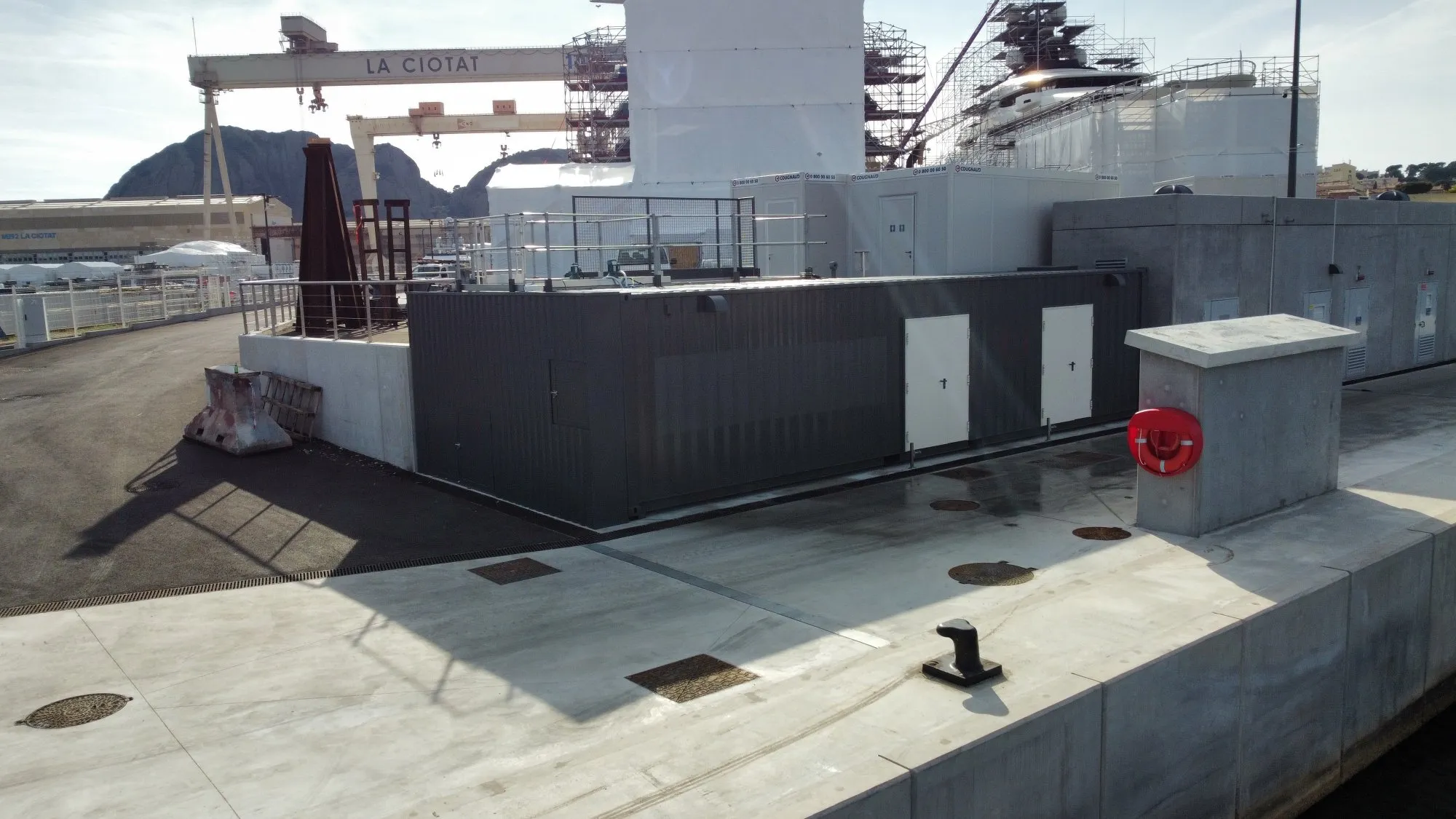
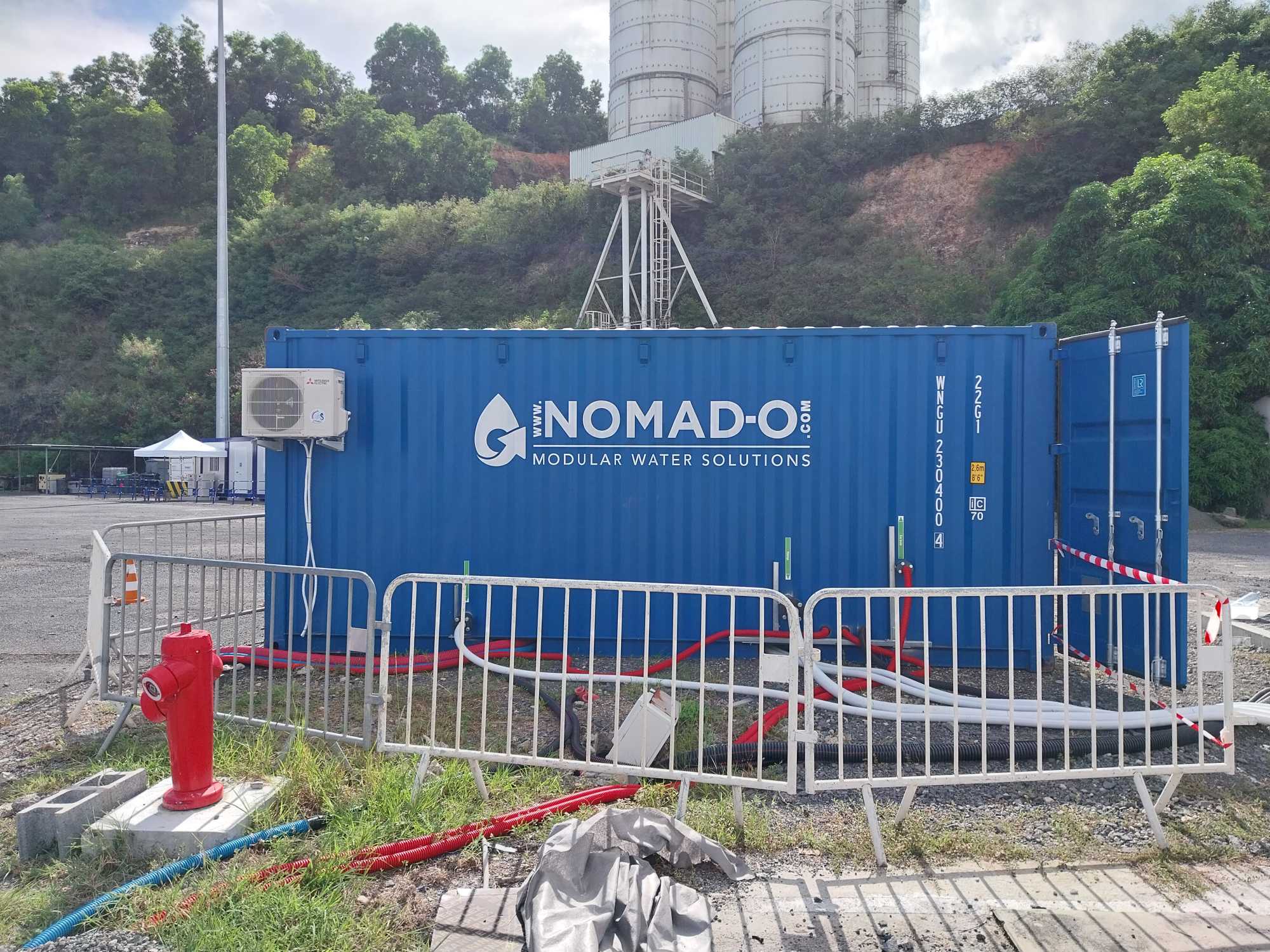
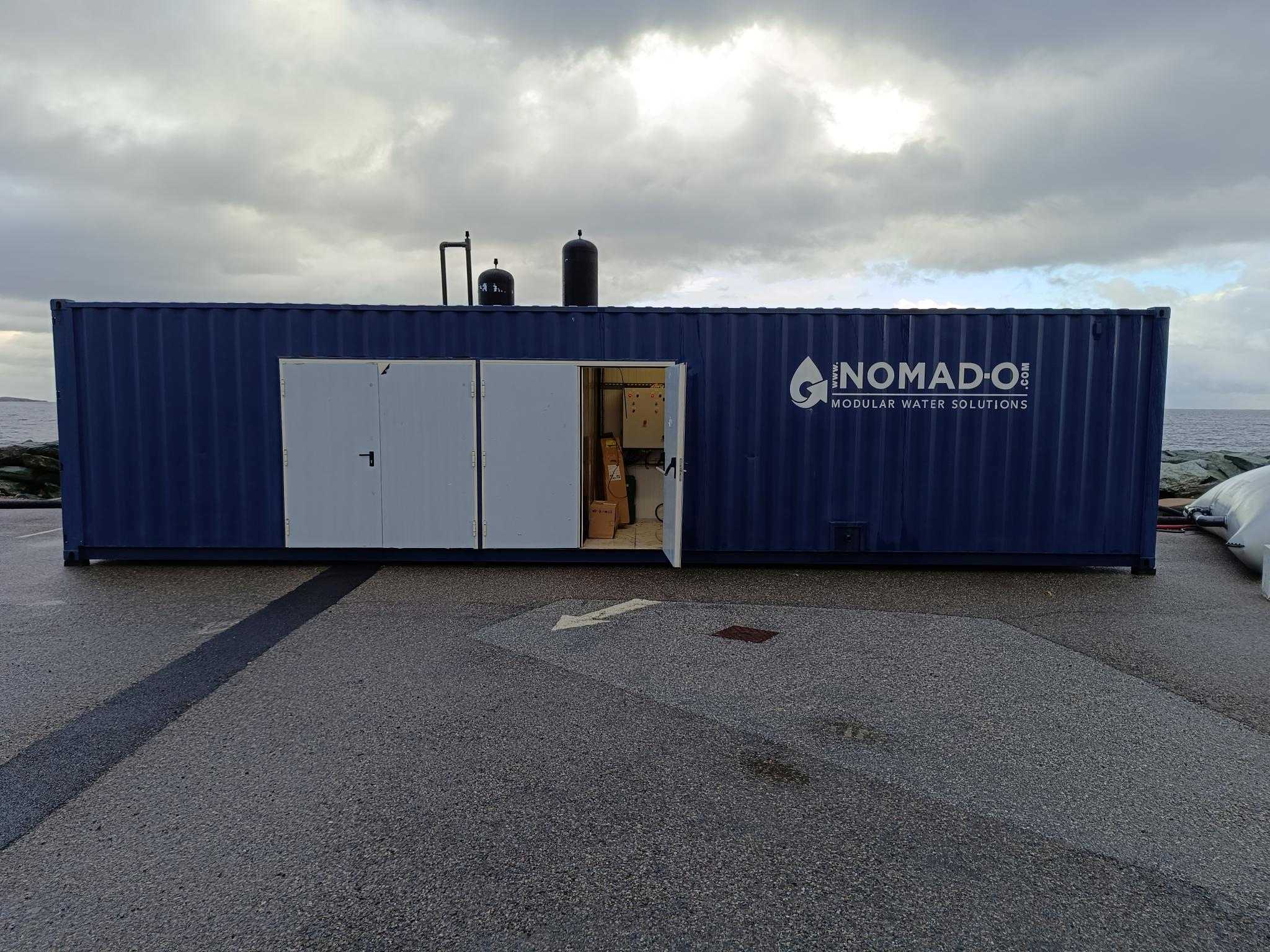
Nomado designed and deployed a complete containerised desalination unit in 3 × 40-foot containers, integrating the full treatment chain — from seawater pumping through to injection into the communal distribution network.
Our approach combined high desalination performance (double-pass reverse osmosis), robustness for island operation and DWS compliance.
Complete desalination process in 3 × 40-foot containers
Pumping and pre-treatment
- Seawater pumping: seawater intake offshore from the port of Macinaggio
- Microcoagulation: destabilisation of fine suspended particles in raw seawater
- Sand filtration: removal of suspended solids and turbidity to protect the reverse osmosis membranes
- Filtered water tank: buffer storage between pre-treatment and the membrane stage
Desalination by double-pass reverse osmosis
Nomado selected a double-pass architecture to guarantee DWS quality and minimise residual boron and salt content:
- Microfiltration: final protection of the reverse osmosis membranes
- 1st-pass high-pressure pump: pressurisation for passage through 1st-pass membranes
- Energy recovery system: recovery of concentrate pressure energy to significantly reduce the unit's electricity consumption
- 1st-pass reverse osmosis membranes: removal of the bulk of dissolved salts and boron
- 2nd-pass pump: re-pressurisation of 1st-pass permeate
- 2nd-pass reverse osmosis membranes: final polishing to meet the most stringent DWS criteria
Post-treatment and network injection
- Remineralisation: reagent injection to correct pH and reconstitute a mineral content compatible with DWS organoleptic and regulatory criteria
- Chlorination: final disinfection of produced water to ensure microbiological safety to the consumer
- Network pressure boost: pressurisation of produced water for direct injection into the communal distribution network
Commissioning and operation
- On-site commissioning at the port of Macinaggio by Nomado teams
- Unit operation: analytical monitoring, consumables management, preventive and corrective maintenance
Results achieved
- Production of 25 m³/h of DWS-compliant drinking water from Mediterranean seawater
- Mobile containerised unit (3 × 40 feet), rapidly deployed at the port of Macinaggio despite the island constraints of Cap Corse
- Double-pass architecture with energy recovery: high water quality produced and optimised electricity consumption
- Supply of the communal 47,500 m³ reserve and securing of drinking water supply for the 2022 summer season
- Relocatable solution, available for other supply crises or future deficit seasons