The client challenge
Aximum operates a hot-dip galvanising and steel treatment plant in Nogent-sur-Oise (60). These processes generate runoff water heavily loaded with heavy metals, particularly zinc and iron, whose concentrations exceeded the regulatory thresholds permitted for discharge into the stormwater network.
Faced with these observed exceedances and the obligations they entail, Aximum needed a treatment solution capable of:
- Treating runoff water generated by galvanising activities
- Reducing zinc and iron concentrations below regulatory thresholds
- Integrating into a constrained industrial environment with a managed footprint
To address this challenge, Aximum turned to Nomado to design and deploy a tailored, compact, immediately operational treatment unit.
The Nomado solution
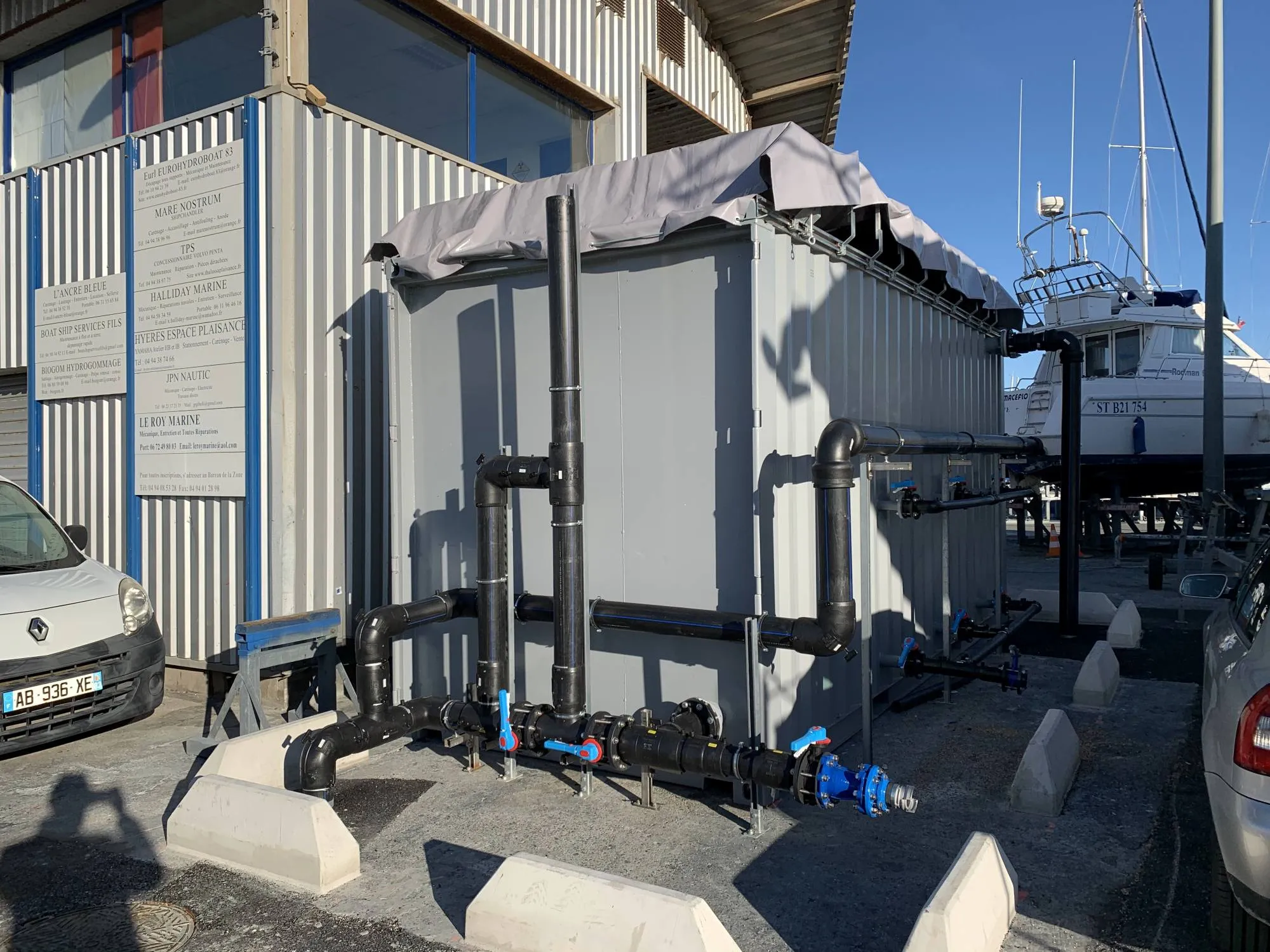
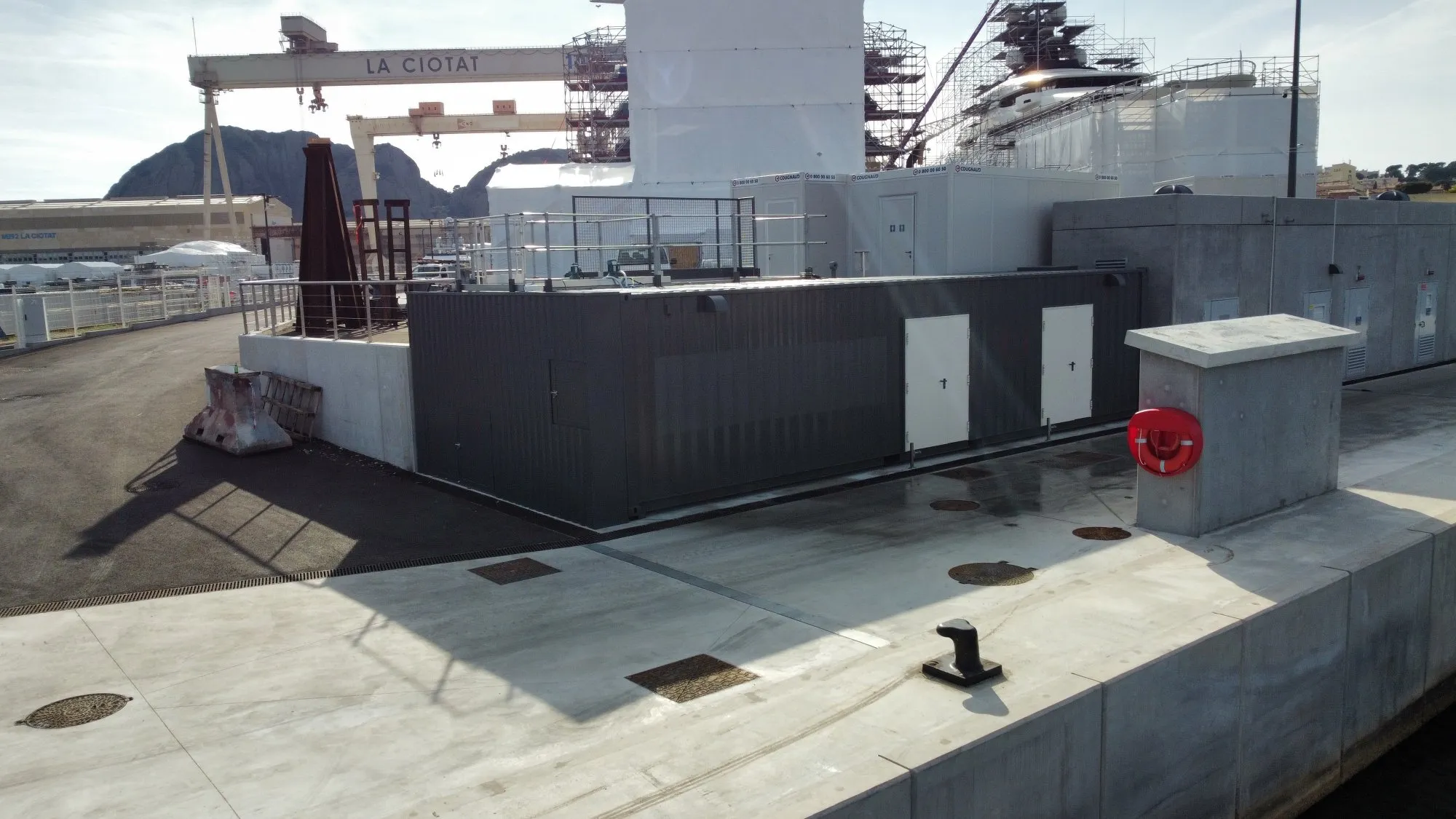
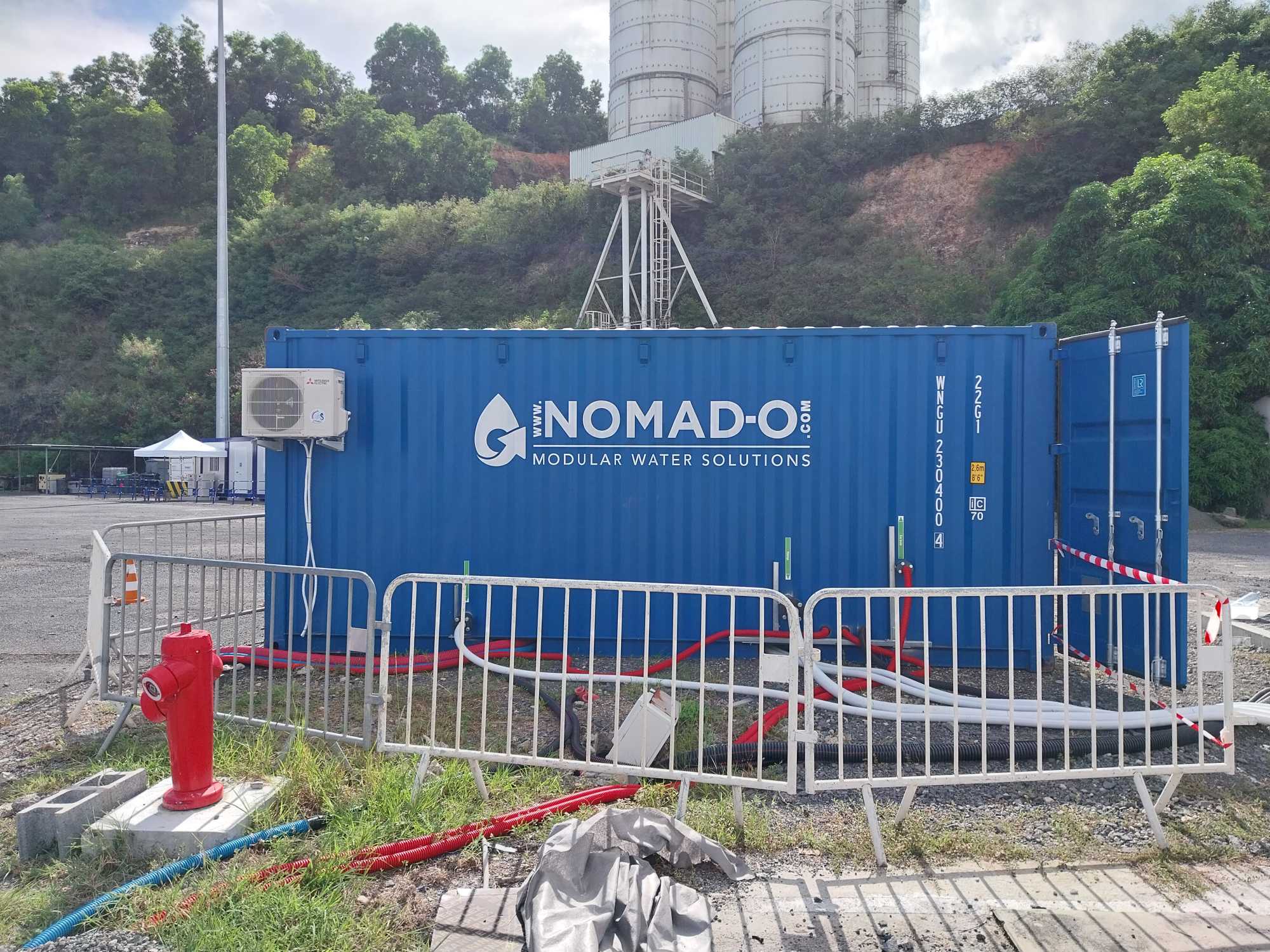
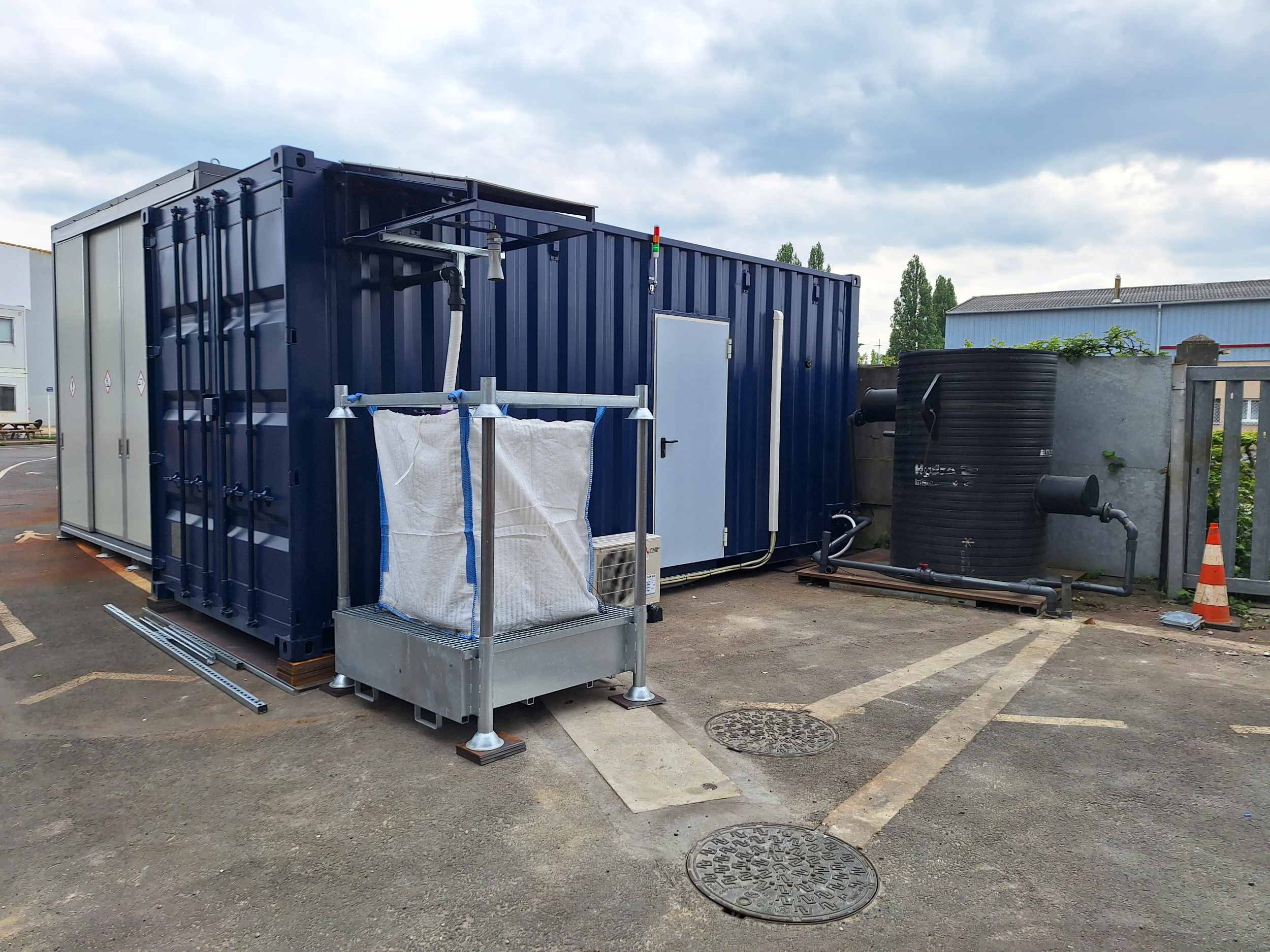
To support Aximum, Nomado designed and commissioned a containerised physico-chemical treatment unit, specifically dimensioned for the constraints of this industrial site.
Our approach was built on three core commitments: technical effectiveness, compactness and ease of operation.
A targeted response to heavy metals
The unit deployed by Nomado treats runoff water at a flow rate of 4 m³/h through a sequence of complementary treatment steps:
pH correction
- Preliminary neutralisation to optimise downstream steps and ensure precipitation of dissolved metals.
Physico-chemical treatment
- Coagulation: destabilisation of suspended particles and metals.
- Flocculation: agglomeration of pollutants into settleable flocs.
- Lamellar settling: effective separation of sludge and suspended solids.
A modular solution, delivered turnkey
20-foot High Cube containerised unit
- Treatment flow rate: 4 m³/h, matched to the site's activity.
- Compact solution integrating the entire process in a single container.
- Rapid on-site installation with no heavy civil works.
Results achieved
- Effluent discharge compliant with applicable regulatory standards.
- Controlled investment thanks to the modular approach.
- Scalable system, adaptable to future increases in flow rates or treatment requirements.