The client challenge
In early October 2020, Storm Alex struck the Vésubie Valley with exceptional violence. Within hours, flash floods devastated the infrastructure of several villages: roads cut off, water and electricity networks out of service, and most critically, wastewater treatment plants swept away or rendered unusable.
The Métropole Nice Côte d'Azur, responsible for wastewater management and treatment across its territory, faced a sanitary emergency: villages with no treatment capacity, with an immediate risk of raw wastewater discharge into mountain watercourses.
The constraints were extreme:
- Emergency deployment timeline: the affected villages could not remain without treatment for the time required for conventional reconstruction (12 to 24 months)
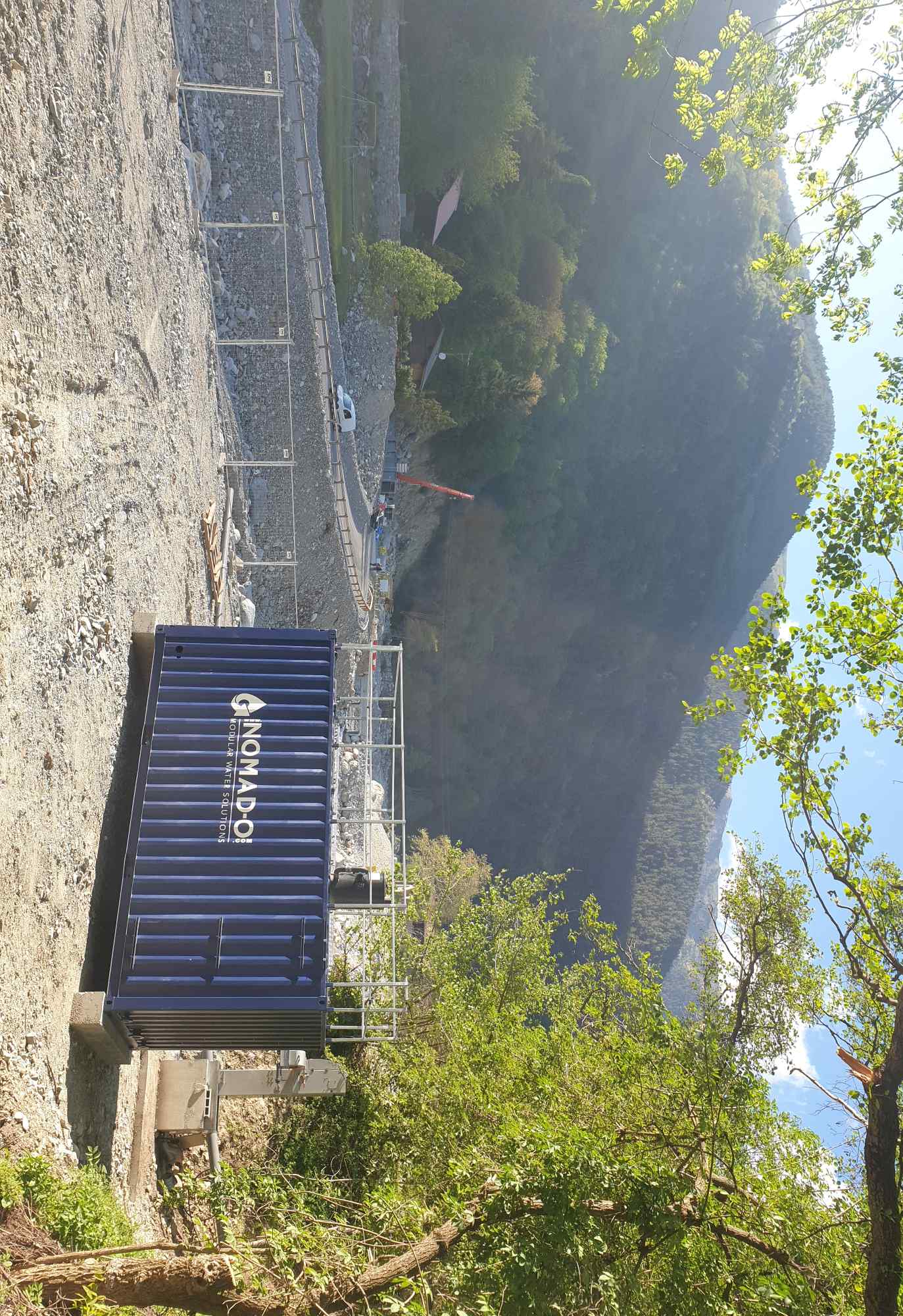
- Mountain sites with difficult access, with roads partially destroyed by the storm
- Three villages simultaneously affected, each requiring an independent unit
- No civil engineering infrastructure available for rapid installation
- Regulatory discharge requirements maintained despite the emergency context
The Métropole Nice Côte d'Azur called on Nomado to design and deliver 3 emergency wastewater treatment plants in the shortest possible timeframe.
The Nomado solution
Nomado responded to the emergency with a modular and containerised solution, designed to be operational within timeframes incompatible with conventional construction.
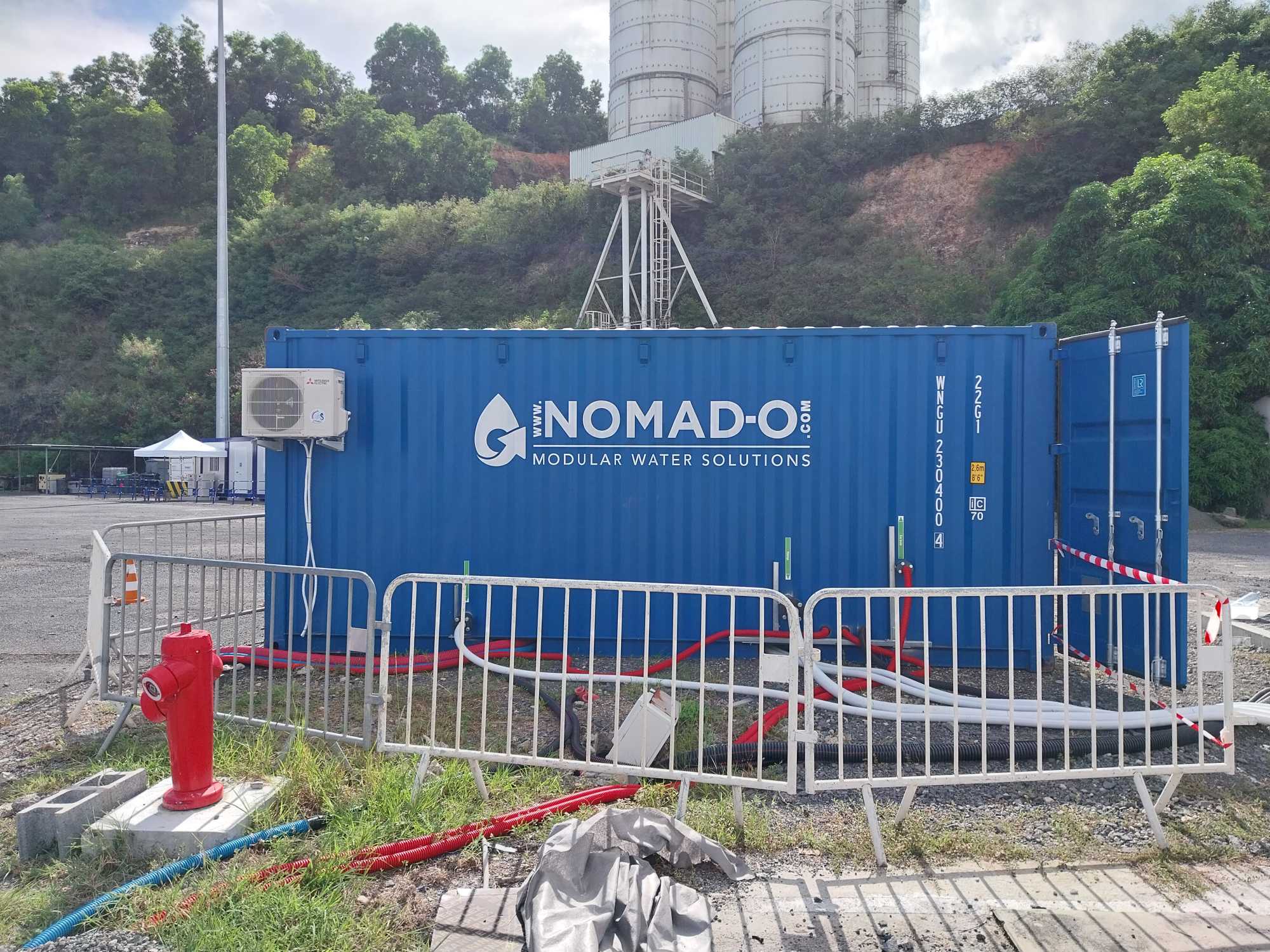
Our approach combined rapid deployment, technical robustness and operational autonomy, integrating the full treatment process in a format transportable by lorry — or by helicopter if required.
Three compact biological MBBR units
Each unit deployed integrates a complete biological process, from raw effluent collection through to treated discharge:
Collection and pre-treatment
- Automatic bar screen: separation of solids and floating debris at the process inlet, protecting downstream equipment
- Effluent lift station (2 pumps): intake of raw wastewater and transfer to the treatment unit
- Settlement tanks: primary pre-treatment of effluents before biological treatment
- Bioreactor feed and flow equalisation tank: regulation of incoming flow to avoid hydraulic surges and ensure biological stability
Biological treatment
- MBBR fluidised bed bioreactor (Moving Bed Biofilm Reactor): degradation of carbonaceous and nitrogenous pollution by biofilm fixed on mobile carriers, ensuring high performance even under variable flow conditions
Clarification and sludge storage
- Lamellar clarifier: separation of biological sludge and clarification of effluent before discharge
- Sludge storage: sludge accumulator enabling deferred management of removals, adapted to the access constraints of mountain sites
Emergency design and deployment
- Rapid design study: sizing of the 3 units adapted to the populations and flows of each affected village
- Accelerated workshop manufacture: full integration of equipment in compact maritime containers, testable before dispatch
- Transport and installation on difficult-access mountain sites
- Commissioning by Nomado teams at each site
Results achieved
- Three villages restored to compliant treatment capacity within a timeframe incomparable with conventional reconstruction
- Zero raw wastewater discharge into valley watercourses during the post-disaster period
- Compact units adapted to mountain site constraints: small footprint, transport by standard lorry, installation without heavy civil works
- MBBR technology ensuring stable performance even with load variations linked to the progressive reoccupation of villages
- Reusable solution: after their emergency mission, the units can be relocated to other projects